POLL CONTROL
In Their Phony Poll TMT Contacted Only 504 People.
70% Were From O`ahu, Only 22% Were Kanaka.
Yet TMT Falsely Claims This Represents A Majority of Hawai'i Community Support For Building The TMT Atop Mauna Kea.
Showing posts with label Mauna Majority. Show all posts
Friday, May 29, 2020
Tuesday, March 03, 2020
Tuesday, February 18, 2020
HARRY KIM ASKS TMT TO DELAY CONSTRUCTION FOR TWO MORE MONTHS
Hawai`i Tribune-Herald - February 18, 2020
The current truce between the Thirty Meter Telescope and its opponents might be extended by another two months at the request of Hawai`i Island Mayor Harry Kim.
In late December, Kim approached leaders of the anti-TMT protest with an offer to reopen the Maunakea Access Road — which had at the time been closed and occupied by protesters for more than five months — and a promise from TMT officials that no attempts to build the observatory would take place until at least the end of February.
With the end of the month less than two weeks away, Kim said he has worked to try to extend the grace period, to give both sides an opportunity to find common ground and reach some kind of mutual agreement.
“Of course, my authority over the whole thing is really quite limited,” Kim said. “But I have asked TMT to extend the period by another two months.”
Kim said he is awaiting a response from TMT officials, adding that his proposal for a two-month extension was discussed at a meeting of the TMT board last week.
Although the results of that meeting have not been disclosed to him, Kim said he believes he will get an official answer from TMT by the end of the week.
Noe Noe Wong-Wilson, one of the leaders of the protest, said she hopes the period can be extended, in order to give TMT officials more time to consider building elsewhere.
“I think it would be beneficial for all of us if it gets extended,” Wong-Wilson said. “The best case for us is for law enforcement to continue to stand down. … We’ll remain on the mountain, and it will give them time to reconsider what they’re doing.”
Wong-Wilson said the protesters — who call themselves protectors of Maunakea and oppose the construction of TMT because they consider the mountain sacred — have not been privy to any of the mayor’s discussions regarding the extension of the truce.
Without an official answer from TMT — a TMT spokesperson was unable to provide a statement on Monday — the truce will come to an end after Feb. 29, although neither Kim nor Wong-Wilson were confident about what that means.
“There’s no answer at this point for what happens after the 29th,” Kim said.
While Wong-Wilson said she does not expect TMT will attempt construction immediately on March 1, she said the protesters may begin to return to “high alert,” as they were during the five-month standoff last year.
Hawai`i Tribune-Herald - February 18, 2020
The current truce between the Thirty Meter Telescope and its opponents might be extended by another two months at the request of Hawai`i Island Mayor Harry Kim.
In late December, Kim approached leaders of the anti-TMT protest with an offer to reopen the Maunakea Access Road — which had at the time been closed and occupied by protesters for more than five months — and a promise from TMT officials that no attempts to build the observatory would take place until at least the end of February.
With the end of the month less than two weeks away, Kim said he has worked to try to extend the grace period, to give both sides an opportunity to find common ground and reach some kind of mutual agreement.
“Of course, my authority over the whole thing is really quite limited,” Kim said. “But I have asked TMT to extend the period by another two months.”
Kim said he is awaiting a response from TMT officials, adding that his proposal for a two-month extension was discussed at a meeting of the TMT board last week.
Although the results of that meeting have not been disclosed to him, Kim said he believes he will get an official answer from TMT by the end of the week.
Noe Noe Wong-Wilson, one of the leaders of the protest, said she hopes the period can be extended, in order to give TMT officials more time to consider building elsewhere.
“I think it would be beneficial for all of us if it gets extended,” Wong-Wilson said. “The best case for us is for law enforcement to continue to stand down. … We’ll remain on the mountain, and it will give them time to reconsider what they’re doing.”
Wong-Wilson said the protesters — who call themselves protectors of Maunakea and oppose the construction of TMT because they consider the mountain sacred — have not been privy to any of the mayor’s discussions regarding the extension of the truce.
Without an official answer from TMT — a TMT spokesperson was unable to provide a statement on Monday — the truce will come to an end after Feb. 29, although neither Kim nor Wong-Wilson were confident about what that means.
“There’s no answer at this point for what happens after the 29th,” Kim said.
While Wong-Wilson said she does not expect TMT will attempt construction immediately on March 1, she said the protesters may begin to return to “high alert,” as they were during the five-month standoff last year.
Tuesday, February 11, 2020
Friday, January 24, 2020
PROTECTORS OPPOSE MAUNA KEA TELESCOPE AT UC REGENTS MEETING
The Daily Californian - January 24, 2020
About 80 protesters gathered at a UC Board of Regents meeting Thursday to demand that the UC system divests from the Thirty Meter Telescope, or TMT, project on Mauna Kea — a mountain that is sacred to Native Hawaiians.
These protesters consisted of the Mauna Kea Protectors, students from various schools within the UC system, Bay Area residents and some Native Hawaiians from the state itself, according to UC Santa Cruz Mauna Kea Protectors member Karli DeRego. The group gathered around 8 a.m. and spoke at the meeting to express its concerns about the UC system investing in TMT, according to Mauna Kea Protectors at UC Berkeley organizer Sarah Bancroft.
“We’re here to inform you that the people of Hawaii will not accept this anymore,” said Joshua Lanakila Mangauil, an organizer of the protest. “I ask this body to reinstill that money … and take care of your own students.”
The TMT International Observatory is a partnership between the UC system and the California Institute of Technology, as well as other organizations from Japan, China, India and Canada. Mangauil alleged that India, one of the partners in the project, said it wanted the TMT project moved away from Mauna Kea.
The protesters then went outside to hold a press conference and read a letter written by the United Nations Committee on the Elimination of Racial Discrimination. DeRego, along with Ashley Garelick from Intersectional Feminists at UC Santa Barbara and Angeli Noelle Cabrera from the UC Santa Barbara Pacific Islander Student Association, read excerpts from the letter aloud.
“Accordingly, the committee requests the state party to provide information on the steps taken to … ensure the right to consultation and free, prior and informed consent to Native Hawaiians affected by projects on or near their ancestral lands and territories,” stated the letter. “Consider the suspension of the Thirty Meter Telescope project. … Consider adopting concrete measures to effectively protect the sacred sites of indigenous peoples.”
Mangauil then led the group in an “aha” protocol, a traditional Native Hawaiian ritual practice, after a member of a local indigenous community spoke and prayed for the success of the Mauna Kea protesters. For the next hour, Mangauil played a massive drum and chanted while the other protesters repeated his chants and danced traditional dances. Some bystanders joined in the dancing, and some protesters took their shoes off.
At the end of the rally, Mangauil spoke to the crowd and explained the purpose of them demonstrating for Mauna Kea. He spoke of transforming systems that are “not serving” the people and of the importance of fighting for one’s community.
“Call that mana,” Mangauil said. “Face that fire.” Then, with a closing song, the protest concluded.
TMT would be one of the world’s most powerful telescopes and would be able to provide images 10 times sharper than those from the Hubble Space Telescope, according to UC Office of the President spokesperson Stett Holbrook.
TMT has collaborated with the Hawaiian community for more than 10 years to address cultural, environmental, educational and economic issues, Holbrook said in an email. Holbrook added that UC Board of Regents chair John Pérez wanted the discussion of the TMT project to come before the full board.
“The TIO and its individual partners have a longstanding history of advancing astronomy on Hawaii Island and have worked diligently for more than a decade to engage community members, the local business community and the state in finding a peaceful path forward on Maunakea,” Holbrook said in the email. “TMT remains committed to integrating science and culture, providing the best possible stewardship, enriching the local economy and supporting educational opportunities as it enables this global scientific endeavor.”
The Daily Californian - January 24, 2020
About 80 protesters gathered at a UC Board of Regents meeting Thursday to demand that the UC system divests from the Thirty Meter Telescope, or TMT, project on Mauna Kea — a mountain that is sacred to Native Hawaiians.
These protesters consisted of the Mauna Kea Protectors, students from various schools within the UC system, Bay Area residents and some Native Hawaiians from the state itself, according to UC Santa Cruz Mauna Kea Protectors member Karli DeRego. The group gathered around 8 a.m. and spoke at the meeting to express its concerns about the UC system investing in TMT, according to Mauna Kea Protectors at UC Berkeley organizer Sarah Bancroft.
“We’re here to inform you that the people of Hawaii will not accept this anymore,” said Joshua Lanakila Mangauil, an organizer of the protest. “I ask this body to reinstill that money … and take care of your own students.”
The TMT International Observatory is a partnership between the UC system and the California Institute of Technology, as well as other organizations from Japan, China, India and Canada. Mangauil alleged that India, one of the partners in the project, said it wanted the TMT project moved away from Mauna Kea.
The protesters then went outside to hold a press conference and read a letter written by the United Nations Committee on the Elimination of Racial Discrimination. DeRego, along with Ashley Garelick from Intersectional Feminists at UC Santa Barbara and Angeli Noelle Cabrera from the UC Santa Barbara Pacific Islander Student Association, read excerpts from the letter aloud.
“Accordingly, the committee requests the state party to provide information on the steps taken to … ensure the right to consultation and free, prior and informed consent to Native Hawaiians affected by projects on or near their ancestral lands and territories,” stated the letter. “Consider the suspension of the Thirty Meter Telescope project. … Consider adopting concrete measures to effectively protect the sacred sites of indigenous peoples.”
Mangauil then led the group in an “aha” protocol, a traditional Native Hawaiian ritual practice, after a member of a local indigenous community spoke and prayed for the success of the Mauna Kea protesters. For the next hour, Mangauil played a massive drum and chanted while the other protesters repeated his chants and danced traditional dances. Some bystanders joined in the dancing, and some protesters took their shoes off.
At the end of the rally, Mangauil spoke to the crowd and explained the purpose of them demonstrating for Mauna Kea. He spoke of transforming systems that are “not serving” the people and of the importance of fighting for one’s community.
“Call that mana,” Mangauil said. “Face that fire.” Then, with a closing song, the protest concluded.
TMT would be one of the world’s most powerful telescopes and would be able to provide images 10 times sharper than those from the Hubble Space Telescope, according to UC Office of the President spokesperson Stett Holbrook.
TMT has collaborated with the Hawaiian community for more than 10 years to address cultural, environmental, educational and economic issues, Holbrook said in an email. Holbrook added that UC Board of Regents chair John Pérez wanted the discussion of the TMT project to come before the full board.
“The TIO and its individual partners have a longstanding history of advancing astronomy on Hawaii Island and have worked diligently for more than a decade to engage community members, the local business community and the state in finding a peaceful path forward on Maunakea,” Holbrook said in the email. “TMT remains committed to integrating science and culture, providing the best possible stewardship, enriching the local economy and supporting educational opportunities as it enables this global scientific endeavor.”
Thursday, January 23, 2020
THIRTY METER TELESCOPE PARTNER SAYS PROJECT SHOULD LEAVE HAWAI`I
Hawai`i Tribune Herald - January 22, 2020
One of the six partners involved in the Thirty Meter Telescope project no longer wants the telescope to be built on Maunakea, according to news reports.
In a Jan. 21 article in The Hindu, the second-largest English newspaper in India, the secretary of India’s Department of Science and Technology, Ashutosh Sharma, was quoted as saying that the Indian government wants the TMT project to move to a different site.
“India’s position has been clear,” Sharma reportedly told The Hindu. “We would like the project to move to an alternate site if all the procedures and permits there are in place. The difficulty is that even if construction (on Maunakea) were to go ahead, there could be future agitations.”
India’s Department of Science and Technology is one of six full partners invested in the TMT project, along with the California Institute of Technology, the University of California, the National Research Council of Canada, the National Astronomical Observatories of the Chinese Academy of Sciences, and the National Institutes of Natural Sciences and National Astronomical Observatory of Japan.
According to The Hindu, India has committed $200 million to the project, about 10% of the proposed cost, and is currently manufacturing 83 of the 492 mirrors required to complete the TMT.
So far, no other partner has publicly advocated for moving the project from Maunakea, which is considered to be the optimal site for the telescope.
If the project were to be moved, the most likely secondary choice would be the island of La Palma in the Canary Islands. While TMT officials have secured some of the necessary paperwork to build on La Palma, they said in November that Maunakea remains their preferred site.
Representatives of the project partners are expected to meet in February. Eswar Reddy, program director for the India TMT Coordination Center, told The Hindu that “by this year, we have to take a firm call on where the project has to be located.”
In a Jan. 21 article in The Hindu, the second-largest English newspaper in India, the secretary of India’s Department of Science and Technology, Ashutosh Sharma, was quoted as saying that the Indian government wants the TMT project to move to a different site.
“India’s position has been clear,” Sharma reportedly told The Hindu. “We would like the project to move to an alternate site if all the procedures and permits there are in place. The difficulty is that even if construction (on Maunakea) were to go ahead, there could be future agitations.”
India’s Department of Science and Technology is one of six full partners invested in the TMT project, along with the California Institute of Technology, the University of California, the National Research Council of Canada, the National Astronomical Observatories of the Chinese Academy of Sciences, and the National Institutes of Natural Sciences and National Astronomical Observatory of Japan.
According to The Hindu, India has committed $200 million to the project, about 10% of the proposed cost, and is currently manufacturing 83 of the 492 mirrors required to complete the TMT.
So far, no other partner has publicly advocated for moving the project from Maunakea, which is considered to be the optimal site for the telescope.
If the project were to be moved, the most likely secondary choice would be the island of La Palma in the Canary Islands. While TMT officials have secured some of the necessary paperwork to build on La Palma, they said in November that Maunakea remains their preferred site.
Representatives of the project partners are expected to meet in February. Eswar Reddy, program director for the India TMT Coordination Center, told The Hindu that “by this year, we have to take a firm call on where the project has to be located.”
Monday, December 23, 2019
MAUNA KEA UPDATE
Aloha `āina kākou,
On Thursday, Dec 19th, state law enforcement officers ordered kia`i to clear the road by December 26th or face mass arrests.
While the deadline to clear the road is December 26th, we do not believe that law enforcement will attempt to sweep kūpuna and ki`i on this day, but we must remain vigilant and prepared.
Aloha `āina kākou,
On Thursday, Dec 19th, state law enforcement officers ordered kia`i to clear the road by December 26th or face mass arrests.
While the deadline to clear the road is December 26th, we do not believe that law enforcement will attempt to sweep kūpuna and ki`i on this day, but we must remain vigilant and prepared.
We are putting out a kāhea to all Hawai`i Island kia`i, to spend the holiday on the Mauna with the kūpuna and be prepared to kūpa`a, stand with us, should state enforcement officers arrive on the 26th.
For all other kia`i, on neighbor islands and beyond, we ask that you be on standby for a kāhea. To all who come, be prepared for extreme weather and cold nights.
The road to the summit of Maunakea is currently open to the public via the side gravel road alongside the kupuna tent. Please drive carefully and slowly.
It is our wish that all kūpuna, all kia`i, state enforcement officers and administrators, and all the people of Hawai`i enjoy a peaceful holiday in the warmth and aloha of friends and loved ones.
Hau`oli Ao Polohiwa a Kanaloa, Lonoikamakahiki and see you on the Mauna!
#Repost Pu'uhonua o Pu'uhuluhulu Maunakea
For all other kia`i, on neighbor islands and beyond, we ask that you be on standby for a kāhea. To all who come, be prepared for extreme weather and cold nights.
The road to the summit of Maunakea is currently open to the public via the side gravel road alongside the kupuna tent. Please drive carefully and slowly.
It is our wish that all kūpuna, all kia`i, state enforcement officers and administrators, and all the people of Hawai`i enjoy a peaceful holiday in the warmth and aloha of friends and loved ones.
Hau`oli Ao Polohiwa a Kanaloa, Lonoikamakahiki and see you on the Mauna!
#Repost Pu'uhonua o Pu'uhuluhulu Maunakea
Saturday, December 21, 2019
Friday, December 20, 2019
THINK AGAIN
Honolulu Star-Advertiser - December 20, 2019
In a confusing flurry of activity Thursday, Gov. David Ige said he was removing state law enforcement personnel from Mauna Kea for the time being, while a top state law enforcement officer warned the protesters blocking the Mauna Kea Access Road that they have until Dec. 26 to clear the road, or face arrest.
Hawai`i County Mayor Harry Kim announced county police also will withdraw from the Mauna Kea protests by Friday afternoon, but Police Chief Paul Ferreira said his department is aware of the state’s Dec. 26 deadline for the protesters. “If there is going to be action, they’re going to take it, and we’re going to support,” he said.
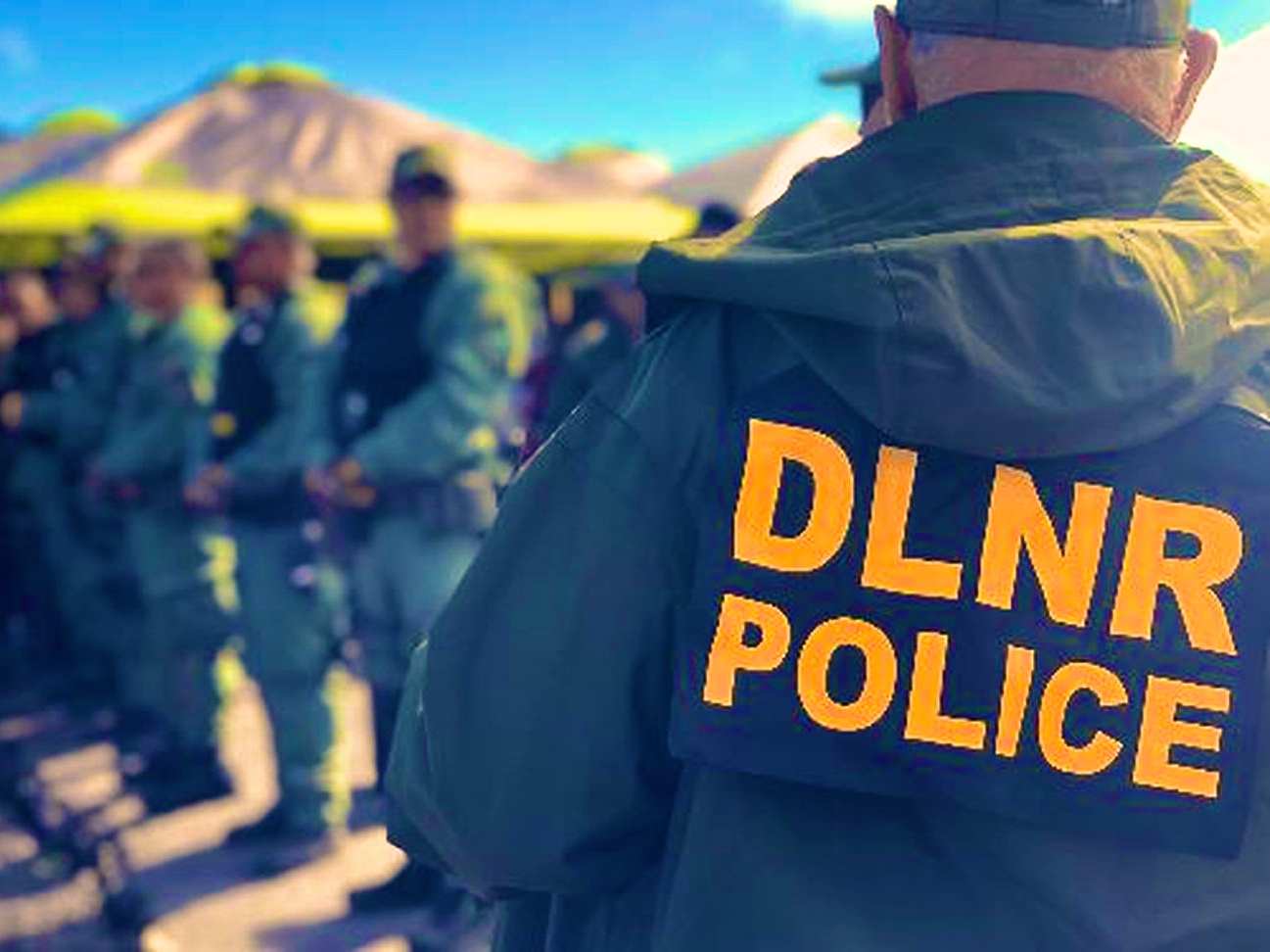
Lino Kamakau, branch chief of the Department of Land and Natural Resources Division of Conservation and Resource Management, described the new deadline in a briefing for about 75 protesters at the camp shortly after Ige announced law enforcement officials would leave the site of the long standoff.
Kaho`okahi Kanhua, one of the leaders of the protest, said Kamakau also said that if the road is not opened by Dec. 26, law enforcement “will come in heavy handed.”
“He did say that all levels of force are on the table, whether it’s chemical disbursements, the pepper spray and the mace, whether it’s the LRAD ( a long range acoustic device), all of those implements and those tools or weapons that they brought as was visible on July 15th, 16th and 17th, it’s been communicated to us that those same weapons will be brought back again, and they are prepared to use them if necessary,” Kanuha said.
Kamakau declined comment after the briefing, referring questions to a spokesman for DLNR who was not immediately available.
State Department of Transportation crews began work Thursday dismantling barricades that were placed along the Daniel K, Inouye Highway last summer to help separate the protest camps from the passing traffic. State crews also removed a temporary traffic light placed on the highway to help the streams of protesters to cross safely back and forth across the highway.
The Mauna Kea Access Road has been closed since July 15, and opponents of the $1.4 billion Thirty Meter Telescope established a blockade on the road to prevent TMT equipment from reaching the summit area. The protesters believe construction of TMT on Mauna Kea would be a desecration of a mountain that many Hawaiians consider sacred.
Supporters of the project including Ige say the TMT backers have secured all of the necessary permits from the state and county, and have the right to proceed with construction. But construction of the telescope remains stalled by the protests, which have now lasted more than 22 weeks.
On July 17 police arrested 39 people for obstructing the road, but authorities have made no attempt since then to clear the road to allow work to begin at the TMT site near the summit. Ige has said the state and counties have so far spent $15 million coping with the protests.
Ige’s office wouldn’t comment on the Dec. 26 deadline announced Thursday other than to say that “law enforcement officers on-site continue to talk with the protesters about restoring full public access on Mauna Kea Access Road.”
Just before Kamakau briefed the anti-TMT protesters on the deadline to clear the road, the governor painted a very different picture of his plans for Mauna Kea during an 11 a.m. press conference at the state Capitol.
The governor did not mention the Dec. 26 deadline. Instead, Ige announced that state enforcement officers would withdraw from the mountain because TMT officials said they were not going to proceed with construction at this time.
Ige said, “We have been working with the (TMT International Observatory) being prepared for them beginning construction and when we were informed that they were not going to be proceeding at this time we thought that it would be prudent to remove state personnel and start to de- escalate and return access to Mauna Kea Access Road.”
The Ige administration also distributed a memo in which Ige expressed his “severe disappointment that TMT will not move forward for now, despite months of often intense behind-the-scenes discussions” involving TMT, law enforcement and the protesters.
Gordon Squires, TMT vice president for external relations, released a statement after the governor’s news conference that said in part, “We don’t want to put our workers, the people of Hawaii, and the protesters at risk. Unfortunately, the state and Hawaii County have not demonstrated that they are able to provide safe, sustained access to Maunakea for everyone.”
Squires did not mention a pause in TMT’s plans for Mauna Kea. Squires said in the statement Mauna Kea remains TMT’s preferred site.
“The project and our individual partners are committed to moving forward in a manner that honors and supports our scientific goals, environmental stewardship and the traditions and culture of Hawai`i,” it says.
Squires denied any suggestion the project has been put on hold. But he also said he couldn’t say exactly when construction could start. He said the project was poised to start construction in July and August, but gearing up again will depend on a variety of factors, some of them out of TMT’s control.
Squires noted that weather is a concern as winter sets in on the mountain. “Wintertime construction is challenging but possible,” he said.
Even though Mauna Kea remains the preferred site for the next-generation telescope, the project’s alternative site in the Canary Islands remains very much in play. In fact, the TMT last month obtained its final permit, essentially giving the project a green light.
Noe Noe Wong-Wilson, one of the protest leaders, said the kupuna, or elders, at the protest camp would need to meet to discuss the new deadline. But she was skeptical that the protesters would suddenly voluntarily pack up and clear out of the protest site.
Even though Ige announced Thursday morning that TMT is not ready to move forward at the moment, “there is absolutely nothing that tells us that the threat is removed,” Wong- Wilson said.
“We don’t trust government to begin with and this particular governor, so him making an obtuse statement that TMT has announced that they’re not coming for a while just doesn’t hold any water for us,” she said.
Wong-Wilson said Kamakau told the protesters that law enforcement would visit the protest site each day to ensure progress is being made on removing the tents and equipment that are blocking the Mauna Kea Access Road.
“They are simply telling us the road is now open, you’re in the way, and you have until the 26th of December over the Christmas holiday to remove any blockage of the road, and no options,” she said.
“We asked if there were other options, for example moving to the side of the road, and they were unclear about that,” Wong-Wilson said.
Honolulu Star-Advertiser - December 20, 2019
In a confusing flurry of activity Thursday, Gov. David Ige said he was removing state law enforcement personnel from Mauna Kea for the time being, while a top state law enforcement officer warned the protesters blocking the Mauna Kea Access Road that they have until Dec. 26 to clear the road, or face arrest.
Hawai`i County Mayor Harry Kim announced county police also will withdraw from the Mauna Kea protests by Friday afternoon, but Police Chief Paul Ferreira said his department is aware of the state’s Dec. 26 deadline for the protesters. “If there is going to be action, they’re going to take it, and we’re going to support,” he said.
Lino Kamakau, branch chief of the Department of Land and Natural Resources Division of Conservation and Resource Management, described the new deadline in a briefing for about 75 protesters at the camp shortly after Ige announced law enforcement officials would leave the site of the long standoff.
Kaho`okahi Kanhua, one of the leaders of the protest, said Kamakau also said that if the road is not opened by Dec. 26, law enforcement “will come in heavy handed.”
“He did say that all levels of force are on the table, whether it’s chemical disbursements, the pepper spray and the mace, whether it’s the LRAD ( a long range acoustic device), all of those implements and those tools or weapons that they brought as was visible on July 15th, 16th and 17th, it’s been communicated to us that those same weapons will be brought back again, and they are prepared to use them if necessary,” Kanuha said.
Kamakau declined comment after the briefing, referring questions to a spokesman for DLNR who was not immediately available.
State Department of Transportation crews began work Thursday dismantling barricades that were placed along the Daniel K, Inouye Highway last summer to help separate the protest camps from the passing traffic. State crews also removed a temporary traffic light placed on the highway to help the streams of protesters to cross safely back and forth across the highway.
The Mauna Kea Access Road has been closed since July 15, and opponents of the $1.4 billion Thirty Meter Telescope established a blockade on the road to prevent TMT equipment from reaching the summit area. The protesters believe construction of TMT on Mauna Kea would be a desecration of a mountain that many Hawaiians consider sacred.
Supporters of the project including Ige say the TMT backers have secured all of the necessary permits from the state and county, and have the right to proceed with construction. But construction of the telescope remains stalled by the protests, which have now lasted more than 22 weeks.
On July 17 police arrested 39 people for obstructing the road, but authorities have made no attempt since then to clear the road to allow work to begin at the TMT site near the summit. Ige has said the state and counties have so far spent $15 million coping with the protests.
Ige’s office wouldn’t comment on the Dec. 26 deadline announced Thursday other than to say that “law enforcement officers on-site continue to talk with the protesters about restoring full public access on Mauna Kea Access Road.”
Just before Kamakau briefed the anti-TMT protesters on the deadline to clear the road, the governor painted a very different picture of his plans for Mauna Kea during an 11 a.m. press conference at the state Capitol.
The governor did not mention the Dec. 26 deadline. Instead, Ige announced that state enforcement officers would withdraw from the mountain because TMT officials said they were not going to proceed with construction at this time.
Ige said, “We have been working with the (TMT International Observatory) being prepared for them beginning construction and when we were informed that they were not going to be proceeding at this time we thought that it would be prudent to remove state personnel and start to de- escalate and return access to Mauna Kea Access Road.”
The Ige administration also distributed a memo in which Ige expressed his “severe disappointment that TMT will not move forward for now, despite months of often intense behind-the-scenes discussions” involving TMT, law enforcement and the protesters.
Gordon Squires, TMT vice president for external relations, released a statement after the governor’s news conference that said in part, “We don’t want to put our workers, the people of Hawaii, and the protesters at risk. Unfortunately, the state and Hawaii County have not demonstrated that they are able to provide safe, sustained access to Maunakea for everyone.”
Squires did not mention a pause in TMT’s plans for Mauna Kea. Squires said in the statement Mauna Kea remains TMT’s preferred site.
“The project and our individual partners are committed to moving forward in a manner that honors and supports our scientific goals, environmental stewardship and the traditions and culture of Hawai`i,” it says.
Squires denied any suggestion the project has been put on hold. But he also said he couldn’t say exactly when construction could start. He said the project was poised to start construction in July and August, but gearing up again will depend on a variety of factors, some of them out of TMT’s control.
Squires noted that weather is a concern as winter sets in on the mountain. “Wintertime construction is challenging but possible,” he said.
Even though Mauna Kea remains the preferred site for the next-generation telescope, the project’s alternative site in the Canary Islands remains very much in play. In fact, the TMT last month obtained its final permit, essentially giving the project a green light.
Noe Noe Wong-Wilson, one of the protest leaders, said the kupuna, or elders, at the protest camp would need to meet to discuss the new deadline. But she was skeptical that the protesters would suddenly voluntarily pack up and clear out of the protest site.
Even though Ige announced Thursday morning that TMT is not ready to move forward at the moment, “there is absolutely nothing that tells us that the threat is removed,” Wong- Wilson said.
“We don’t trust government to begin with and this particular governor, so him making an obtuse statement that TMT has announced that they’re not coming for a while just doesn’t hold any water for us,” she said.
Wong-Wilson said Kamakau told the protesters that law enforcement would visit the protest site each day to ensure progress is being made on removing the tents and equipment that are blocking the Mauna Kea Access Road.
“They are simply telling us the road is now open, you’re in the way, and you have until the 26th of December over the Christmas holiday to remove any blockage of the road, and no options,” she said.
“We asked if there were other options, for example moving to the side of the road, and they were unclear about that,” Wong-Wilson said.
Thursday, December 19, 2019
BEGINNING OF THE END - POLICE TO LEAVE MAUNA KEA
Honolulu Star-Advertiser - December 19, 2019
Gov. David Ige plans to pull state law enforcement officers back from the scene of the protests against the Thirty Meter Telescope, at least temporarily, sources said this morning.
According to a memo distributed by the Ige administration this morning, Ige expressed his “severe disappointment that TMT will not move forward for now, despite months of often intense behind-the-scenes discussions” involving TMT, law enforcement and the protesters.
Ige has said the state and counties have spent $15 million so far coping with the protests.
The memo also said that the TMT is not immediately ready to proceed with the project, prompting Ige to notify the protesters of the temporary stand-down by law enforcement.
However, Ige has said repeatedly he still intends to reassert the “rule of law” and reopen the Mauna Kea Access Road to allow construction to resume on the $1.4 billion telescope.
The stand-down is expected to last about two months, according to one source, but it is unclear what will happen after that.
It is also unclear if the stand-down will prompt the TMT opponents to vacate the protest site they have occupied on the mountain for more than 22 weeks.
The stand-down did not appear to have taken effect as of 8 AM this morning.
A half-dozen vehicles belonging to law enforcement officers with the state Department of Land and Natural Resources remained parked above the barricade on the access road as about 30 protesters chanted and danced hula in their morning protocol.
The access road has been closed since July 15.
The protesters believe construction of TMT would be a desecration of a mountain that many Hawaiians consider sacred.
Supporters of the project including Ige say the TMT backers have secured all of the necessary permits from the state and county, and have the right to proceed with construction.
According to a memo distributed by the Ige administration this morning, Ige expressed his “severe disappointment that TMT will not move forward for now, despite months of often intense behind-the-scenes discussions” involving TMT, law enforcement and the protesters.
Ige has said the state and counties have spent $15 million so far coping with the protests.
The memo also said that the TMT is not immediately ready to proceed with the project, prompting Ige to notify the protesters of the temporary stand-down by law enforcement.
However, Ige has said repeatedly he still intends to reassert the “rule of law” and reopen the Mauna Kea Access Road to allow construction to resume on the $1.4 billion telescope.
The stand-down is expected to last about two months, according to one source, but it is unclear what will happen after that.
It is also unclear if the stand-down will prompt the TMT opponents to vacate the protest site they have occupied on the mountain for more than 22 weeks.
The stand-down did not appear to have taken effect as of 8 AM this morning.
A half-dozen vehicles belonging to law enforcement officers with the state Department of Land and Natural Resources remained parked above the barricade on the access road as about 30 protesters chanted and danced hula in their morning protocol.
The access road has been closed since July 15.
The protesters believe construction of TMT would be a desecration of a mountain that many Hawaiians consider sacred.
Supporters of the project including Ige say the TMT backers have secured all of the necessary permits from the state and county, and have the right to proceed with construction.
Tuesday, December 17, 2019
Monday, December 16, 2019
THE END IS NEAR - FROM A THIRTY METER TELESCOPE PRESS RELEASE
December 10, 2019
"The global TMT partnership of Japan, China, India, Canada and the U.S. wants to build the world's next generation telescope on Maunakea.
Yet, after more than a decade of working with the community and a multi-million dollar investment into Hawaii's economy, TMT must now reassess the viability of building a telescope in Hawai`i due to continuing uncertainty that there will be safe and peaceful access to the TMT site on Maunakea."
December 10, 2019
"The global TMT partnership of Japan, China, India, Canada and the U.S. wants to build the world's next generation telescope on Maunakea.
Yet, after more than a decade of working with the community and a multi-million dollar investment into Hawaii's economy, TMT must now reassess the viability of building a telescope in Hawai`i due to continuing uncertainty that there will be safe and peaceful access to the TMT site on Maunakea."
Friday, December 13, 2019
Thursday, December 12, 2019
Saturday, December 07, 2019
LIKE WORKING AT THE MALL - SPENDING TO KEEP THE PEACE WHERE ITʻS NOT NEEDED
Honolulu Star-Advertiser - By Lee Cataluna
Every week now, more or less, there is an update on the amount of money being spent to keep law enforcement at the base of Mauna Kea, where a standoff centered around plans to build the huge Thirty Meter Telescope has stretched on since this summer....
... The state wants everyone to know, law enforcement response to Mauna Kea has cost more than $11 million.
The intended reaction, perhaps, is to make it seem as though the anti- TMT forces are wasting taxpayer money. But it’s not the “protectors” who are calling out the troops. It’s the pro-TMT government leaders. Many of the “protectors” think the money spent on law enforcement is a waste of taxpayer dollars, too. Things have been peaceful and organized on the mauna.
Quantifying the cost of having police, sheriff and DLNR officers is one way to measure the impact of the conflict. What hasn’t been discussed much is qualitative measures of how those expensive man-hours are being used and how effective the effort has been.
There’s not a lot of law- enforcing going on.
It’s not like firefighters battling Maui wildfires or first responders going house to house after a massive flood on the North Shore of Kauai — brave, adrenaline-rush, heroic stuff.
Instead, being assigned to Mauna Kea has to be the easiest law enforcement gig in the entire state at the moment. Keeping the peace among peaceful protesters, making overtime, hanging out in the shaded tent of the checkpoint, sometimes wandering down to talk story with the kupuna — that’s like retiring from active duty and working at the mall. The biggest hardship would be perhaps a bit of boredom and some chilly winds.
There are fewer officers on the mauna these days. A month ago, movement leaders say, there were as many as 10 or 12 DLNR officers at the vehicle checkpoint behind the kupuna tent on the road heading to the summit. Now there are more like five or six per shift. A van brings state sheriffs to a post beyond the DLNR checkpoint, while Hawai`i County police officers are stationed along Saddle Road on both the Hilo and Kona sides of Pu`u Huluhulu.
Yes, the police officers have been giving out a bunch of traffic tickets and citations in the area, but even those numbers seem to be spun to malign the kia`i as troublemakers. Law enforcement won’t say how many drivers they tagged for traffic violations were people connected to the Protect Mauna Kea movement and how many were just area residents or tourists passing through, perhaps because making that distinction won’t help argue their point.
Why do law enforcement officers have to be there 24/7 when there haven’t been any problems for many 24s and lots of 7s?
If the state and Hawaii County want to stop bleeding money on a law enforcement action that has been unnecessary for months, they can call off the troops and call off TMT.
Honolulu Star-Advertiser - By Lee Cataluna
Every week now, more or less, there is an update on the amount of money being spent to keep law enforcement at the base of Mauna Kea, where a standoff centered around plans to build the huge Thirty Meter Telescope has stretched on since this summer....
... The state wants everyone to know, law enforcement response to Mauna Kea has cost more than $11 million.
The intended reaction, perhaps, is to make it seem as though the anti- TMT forces are wasting taxpayer money. But it’s not the “protectors” who are calling out the troops. It’s the pro-TMT government leaders. Many of the “protectors” think the money spent on law enforcement is a waste of taxpayer dollars, too. Things have been peaceful and organized on the mauna.
Quantifying the cost of having police, sheriff and DLNR officers is one way to measure the impact of the conflict. What hasn’t been discussed much is qualitative measures of how those expensive man-hours are being used and how effective the effort has been.
There’s not a lot of law- enforcing going on.
It’s not like firefighters battling Maui wildfires or first responders going house to house after a massive flood on the North Shore of Kauai — brave, adrenaline-rush, heroic stuff.
Instead, being assigned to Mauna Kea has to be the easiest law enforcement gig in the entire state at the moment. Keeping the peace among peaceful protesters, making overtime, hanging out in the shaded tent of the checkpoint, sometimes wandering down to talk story with the kupuna — that’s like retiring from active duty and working at the mall. The biggest hardship would be perhaps a bit of boredom and some chilly winds.
There are fewer officers on the mauna these days. A month ago, movement leaders say, there were as many as 10 or 12 DLNR officers at the vehicle checkpoint behind the kupuna tent on the road heading to the summit. Now there are more like five or six per shift. A van brings state sheriffs to a post beyond the DLNR checkpoint, while Hawai`i County police officers are stationed along Saddle Road on both the Hilo and Kona sides of Pu`u Huluhulu.
Yes, the police officers have been giving out a bunch of traffic tickets and citations in the area, but even those numbers seem to be spun to malign the kia`i as troublemakers. Law enforcement won’t say how many drivers they tagged for traffic violations were people connected to the Protect Mauna Kea movement and how many were just area residents or tourists passing through, perhaps because making that distinction won’t help argue their point.
Why do law enforcement officers have to be there 24/7 when there haven’t been any problems for many 24s and lots of 7s?
If the state and Hawaii County want to stop bleeding money on a law enforcement action that has been unnecessary for months, they can call off the troops and call off TMT.
Friday, December 06, 2019
Thursday, December 05, 2019
CIVIL RESISTANCE OVER TMT IS ABOUT JUSTICE OVERDUE
Honolulu Civil Beat - December 4, 2019 - By Carmen Hulu Lindsey
Sam King’s latest editorial erroneously calls for “hold[ing] TMT protestors accountable” in their “anarchic campaign against the rule of law” (“It’s Time To Hold TMT Protesters Accountable,” Nov. 22).
Although King claims that the kia`i have utilized false narratives to justify their acts of malama `aina, King fails to see that Mauna Kea is symbolic of a broader historical struggle for the rights of Native Hawaiians to exist.
These recent demonstrations are a focal point and encapsulate issues critical to Native Hawaiians, including questions of governance, clashes over land and water, and frustration over the over-exploitation of ancestral lands. This embodies the worst traumas enacted against Native Hawaiians, who continually practice compassion and dedication to restoring self-governance.
King’s calls for conformance to the “rule of law” constitute the continuing systematic attack on Native Hawaiian communities from private sector mega-projects in the name of “research” and “conservation.” We have been long subject to forced evictions, judicial harassment, arbitrary arrests and detention, limitations to the freedom of expression and assembly, and stigmatization resulting in the dislocation and removal from their cultural practices.
Instead, kia`i are actively protecting their constitutional rights to engage in customary and traditional practices shielded by Article XII, Section 7 of the Hawai`i State Constitution and HRS 1-1.
Although King claims that TMT “follow[s] the law,” his description fails to include that government officials “may not act without independently considering the effect of government actions on Hawaiian traditions and practices” that may lead to the “loss of vital cultural resources and the interference with the exercise of native Hawaiian rights.”
Additionally, under Section 5(f) of the Admission Act, the state of Hawai`i (including its agencies) has a public trust duty to manage the ceded lands in part “for the betterment of the conditions of native Hawaiians.”
Obligations Ignored
Four scathing state audits demonstrated the state and university’s longstanding mismanagement of resources. Although these officials take an oath to protect the interests of the public, they conveniently choose to ignore their legal obligations to protect monetary interests of corporations at the expense of our Native Hawaiian communities.
Kia`i have been arrested for engaging in their constitutional rights to practice their traditional and customary rights to malama `aina and engage in free speech under the guise of broad and ill-defined charges, such as public disturbance, obstruction, and incitement.
Despite overwhelming evidence of the safety and order present at these demonstrations, government officials and project proponents like King continue with misinformation and propaganda to intimidate and undermine the credibility of protectors. These criminal complaints seek to suspend judicial guarantees and justify the suppression of peaceful social protests.
Additionally, King ignores the substantial dilemmas of Native Hawaiians in the criminal justice system. The prosecution of these Native Hawaiians mirror those of their indigenous comrades who are often subject to abuses like pretrial detention of the accused lasting for several years, lack of access to legal counsel to mount a viable defense, and longer and harsher sentences than their non-Hawaiian counterparts.
If preserving infrastructure research and technology company profits are the goal, there are a variety of legal tools available to law enforcement. The police response to these protests seem disproportionate at best, as demonstrated by the $10 million spent by the Hawaii County Police Department.
Ironically, although the system has agonizingly failed Hawaiians, the system is swift to devote substantial resources into criminalizing them. Our communities are crying for relief and for police supervision to be targeted to address actual growing crime in their districts. However, government officials respond with rapid, increasingly violent police responses with a swelling number of kia`i being arrested.
In a universal context, the rapid expansion of developmental projects on indigenous lands without their consent continues to drive a global crisis. The procedures that lead to the approval of these projects are often flawed by failing to conduct assessments of cultural and environmental impacts and engagement in proper public consultation.
These attacks seek to silence indigenous peoples voicing their opposition to projects that threaten their livelihoods and cultures. Indigenous peoples make up a disproportionate number of those targeted in retaliation for their activism — a number that has continually risen in recent years, even though indigenous peoples represent just 5% of the global population.
In short, these acts of civil disobedience are about overdue justice for Native Hawaiians. Even though King complains that TMT is frustrated because their 10-year process and public engagement efforts were “fair and consistent,” we are now forced to confront the crisis that our systems that continually privilege “advancement” of the Western scientific community, which appears willing to bulldoze any culture to further its material desires.
For 125 years, Native Hawaiians have felt ignored, disregarded, and unable to exercise governance over their own affairs in an oppressive state. Now, we seek to tackle these extraordinary injustices face on by being uplifted by our resilience and cultural history.
We are answering the calls in our na`au (mind or heart) to call for a righteous home in desperate need for systemic change — to huli (turn) the system. Our conscious community is standing up for itself after decades of deplorable management of the state’s natural resources at the risk of prioritizing foreign economic interests.
These demonstrations are showing all of us that another world is possible, another way of being with one another and the earth grounded in kapu aloha and the wisdom of our kupuna is a flourishing possibility in our lifetime.
Sam King’s latest editorial erroneously calls for “hold[ing] TMT protestors accountable” in their “anarchic campaign against the rule of law” (“It’s Time To Hold TMT Protesters Accountable,” Nov. 22).
Although King claims that the kia`i have utilized false narratives to justify their acts of malama `aina, King fails to see that Mauna Kea is symbolic of a broader historical struggle for the rights of Native Hawaiians to exist.
These recent demonstrations are a focal point and encapsulate issues critical to Native Hawaiians, including questions of governance, clashes over land and water, and frustration over the over-exploitation of ancestral lands. This embodies the worst traumas enacted against Native Hawaiians, who continually practice compassion and dedication to restoring self-governance.
King’s calls for conformance to the “rule of law” constitute the continuing systematic attack on Native Hawaiian communities from private sector mega-projects in the name of “research” and “conservation.” We have been long subject to forced evictions, judicial harassment, arbitrary arrests and detention, limitations to the freedom of expression and assembly, and stigmatization resulting in the dislocation and removal from their cultural practices.
Instead, kia`i are actively protecting their constitutional rights to engage in customary and traditional practices shielded by Article XII, Section 7 of the Hawai`i State Constitution and HRS 1-1.
Although King claims that TMT “follow[s] the law,” his description fails to include that government officials “may not act without independently considering the effect of government actions on Hawaiian traditions and practices” that may lead to the “loss of vital cultural resources and the interference with the exercise of native Hawaiian rights.”
Additionally, under Section 5(f) of the Admission Act, the state of Hawai`i (including its agencies) has a public trust duty to manage the ceded lands in part “for the betterment of the conditions of native Hawaiians.”
Obligations Ignored
Four scathing state audits demonstrated the state and university’s longstanding mismanagement of resources. Although these officials take an oath to protect the interests of the public, they conveniently choose to ignore their legal obligations to protect monetary interests of corporations at the expense of our Native Hawaiian communities.
Kia`i have been arrested for engaging in their constitutional rights to practice their traditional and customary rights to malama `aina and engage in free speech under the guise of broad and ill-defined charges, such as public disturbance, obstruction, and incitement.
Despite overwhelming evidence of the safety and order present at these demonstrations, government officials and project proponents like King continue with misinformation and propaganda to intimidate and undermine the credibility of protectors. These criminal complaints seek to suspend judicial guarantees and justify the suppression of peaceful social protests.
Additionally, King ignores the substantial dilemmas of Native Hawaiians in the criminal justice system. The prosecution of these Native Hawaiians mirror those of their indigenous comrades who are often subject to abuses like pretrial detention of the accused lasting for several years, lack of access to legal counsel to mount a viable defense, and longer and harsher sentences than their non-Hawaiian counterparts.
If preserving infrastructure research and technology company profits are the goal, there are a variety of legal tools available to law enforcement. The police response to these protests seem disproportionate at best, as demonstrated by the $10 million spent by the Hawaii County Police Department.
Ironically, although the system has agonizingly failed Hawaiians, the system is swift to devote substantial resources into criminalizing them. Our communities are crying for relief and for police supervision to be targeted to address actual growing crime in their districts. However, government officials respond with rapid, increasingly violent police responses with a swelling number of kia`i being arrested.
In a universal context, the rapid expansion of developmental projects on indigenous lands without their consent continues to drive a global crisis. The procedures that lead to the approval of these projects are often flawed by failing to conduct assessments of cultural and environmental impacts and engagement in proper public consultation.
These attacks seek to silence indigenous peoples voicing their opposition to projects that threaten their livelihoods and cultures. Indigenous peoples make up a disproportionate number of those targeted in retaliation for their activism — a number that has continually risen in recent years, even though indigenous peoples represent just 5% of the global population.
In short, these acts of civil disobedience are about overdue justice for Native Hawaiians. Even though King complains that TMT is frustrated because their 10-year process and public engagement efforts were “fair and consistent,” we are now forced to confront the crisis that our systems that continually privilege “advancement” of the Western scientific community, which appears willing to bulldoze any culture to further its material desires.
For 125 years, Native Hawaiians have felt ignored, disregarded, and unable to exercise governance over their own affairs in an oppressive state. Now, we seek to tackle these extraordinary injustices face on by being uplifted by our resilience and cultural history.
We are answering the calls in our na`au (mind or heart) to call for a righteous home in desperate need for systemic change — to huli (turn) the system. Our conscious community is standing up for itself after decades of deplorable management of the state’s natural resources at the risk of prioritizing foreign economic interests.
These demonstrations are showing all of us that another world is possible, another way of being with one another and the earth grounded in kapu aloha and the wisdom of our kupuna is a flourishing possibility in our lifetime.

Monday, November 25, 2019
JANET JACKSON ON MAUNA KEA - "I STAND WITH THEM"
Janet Jackson’s latest round of Hawai`i concerts featured a moment where she and her dancers flash the two-handed sign used by protesters against the Thirty Meter Telescope at Mauna Kea.
She hadn’t made an actual statement during the performance, when photos of the protesters are also shown on a large screen over the stage. But she said she was compelled to do it.
“To be able to want to take this land -- this sacred land -- it’s wrong. It’s not right at all,” she told Hawai`i News Now. “I stand with them.”
Jackson explained her motivation came from Hawai`i dancers who have performed with her.
“There are a few Hawaiians that have been in my camp for a while, for a good while. More than 15 years. And they explained to me the situation, and I was floored.”
Friday, November 22, 2019
TMT & CANARY ISLANDS REACH LAND AGREEMENT
A governmental body in the Canary Islands has approved a land concession deal with the Thirty Meter Telescope partners, although Maunakea remains the project’s preferred location.
According to a Tuesday report from Spanish news agency Europa Press, the City Council of Puntagorda — a municipality on the north end of the island of La Palma in the Canary Islands — has approved a “work permit” that would allow TMT to build in La Palma if the TMT partners so choose.
TMT Vice President Gordon Squires confirmed to the Tribune-Herald that a land concession deal was reached between TMT and Puntagorda, but added that more permits and approvals are required before any construction could begin.
The Europa Press report claimed that TMT would make a decision on where to build in “in the next few days,” and that Canary Islands construction would begin no later than Jan. 30, 2023.
However, Squires said TMT has no current plans to announce a decision on where to build.
“We are very pleased and grateful that certain permits have been granted in La Palma,” Squires wrote in a statement. “Maunakea remains the preferred site for TMT, but this is an essential step in the process for developing our ‘plan B’, should it not be possible to build TMT in Hawaii. At this moment, there is no date set for determining our next steps for constructing TMT.”
With protests against building TMT on Maunakea having gone on for more than four months, many have urged TMT to seek an alternate site to build the telescope, such as La Palma.
Tuesday, November 19, 2019
Subscribe to:
Posts (Atom)