Showing posts with label Coronavirus. Show all posts

Tuesday, September 22, 2020

SIGN OF THE TIMES

Wednesday, August 19, 2020

FREE HAWAI`I TV
THE FREE HAWAI`I BROADCASTING NETWORK


"RIMPAC - WHAT COULD POSSIBLY GO WRONG?"

How Smart Does This Sound?

The US Military Brings Thousands Of Troops To Hawai`i During The Coronavirus Lockdown.

Which Leads Us To Ask A Very Important Question.

Watch This To Hear What That Question Is & Decide How You Would Answer It.


Then Share This Video Today With Your Family & Everyone You Know.

Wednesday, June 03, 2020


FREE HAWAI`I TV
THE FREE HAWAI`I BROADCASTING NETWORK


"WHAT IS YOUR `AINA ALOHA FUTURE?"

What Would You Like Hawai`iʻs Future To Be?

Less Tourists, More Food Sovereignty & Economic Security?

Thereʻs A Place Where You Can Be Part Of This Important Conversation.

Watch This To See What It Is & How You Can Help Put Hawai`iʻs People & Land First.


Then Share This Video Today With Your Family & Everyone You Know.

Wednesday, May 27, 2020


FREE HAWAI`I TV
THE FREE HAWAI`I BROADCASTING NETWORK


"WHATʻS A GROSS DOMESTIC PONO INDICATOR?"

Itʻs Something That Can Create A Whole New Hawai`i.

So The Same Mistakes Donʻt Get Made All Over Again.

Itʻs Actually A Very Simple Tool With Very Big Results.

Watch This To See For Yourself Why Itʻs Key To A Better Future.


Then Share This Video Today With Your Family & Everyone You Know.

Wednesday, May 20, 2020


FREE HAWAI`I TV
THE FREE HAWAI`I BROADCASTING NETWORK


"WHY HONOLULU RAIL SHOULD BE TORN DOWN NOW"

They Never Saw It Coming.

Things Havenʻt Just Gone From Bad To Worse For Honoluluʻs Rail Project.

Itʻs Now Become Obsolete - But Why?

Watch This For Our Answers & Why It Should Be Torn Down Now.


Then Share This Video Today With Your Family & Everyone You Know.

Friday, May 15, 2020

HAS THE US OCCUPATION OF HAWAI`I WORKED?
Honolulu Civil Beat - May 14, 2020 - By Neal Milner

As far as Hawai`i is concerned, when it comes to dealing with coronavirus, Gov. David Ige is in a class by himself.

That class? Bottom of the barrel.

First, I’ll show you just how bad the governor looks on the COVID-19 issue.

But then I am going to show how this low rating is hardly about the virus at all. It is really about the decadence of Hawai`i’s politics.

According to a large national survey, no governor has a lower public approval rating for handling the virus than Ige does.

The average governor approval rating for handling the pandemic is 66%, compared to Trump’s 44%, and Ige’s rating of 39%.

Probably 12% of that 22% difference between the president and the average governor’s approval occurred during the last few weeks.

It’s unlikely that our governor has received any bump at all.

Unlike Hawai`i, Wisconsin and Michigan are contentiously partisan states with considerably higher coronavirus rates than Hawaii and where opposition to the respective governors has dwarfed anything here.

Yet the Michigan governor’s approval (63%) and Wisconsin’s (58%) are both far ahead of Ige.

Only 55% of people in Hawai`i feel that the state is doing a good job handling the situation. That’s the lowest percentage in the nation.

OK, that’s the surface side that leads you to focus on Ige’s pandemic incompetence. That focus on his virus performance is too narrow.

It’s hard to imagine that Governor Ige’s coronavirus pluses and minuses, goof-ups or successes are all that much different than what the other governors have done.

Ige is ranked so low on pandemic management because he is an avatar for a form of governing that’s as much a part of this state as shower trees and feral chickens.

It is also a form of government that the public now considers unworthy of its trust and support.

And there are data to prove it.

Ige’s 39% approval rating is nothing new. His approval rating has pretty much always lingered in the 30s — low and close to Trump’s. He’s also been rated the nation’s worst governor in the past.

It is a ceiling that the public is not willing to let him pass because the public has become so disaffected with Hawai`i’s state government as a whole.

A 2017 University of Hawai`i Center for Public Policy poll asked the question a different way, but with comparable results. Only 19% said Ige was doing an excellent or good job, while 36% rated his work as fair or poor.

But more significantly, in that same 2017 poll close to 40% said the state could seldom or never be trusted to do the right thing, and only 9% said that state government is run for the benefit of the people.

Now, think about the public’s take on the governor’s handling of the coronavirus crisis in terms of this pervasive sense that state government overall is a bumbling, stumbling, untrustworthy mess.

In other words, see the governor’s handling of the virus through the public’s lens of “same old, same old.”

That perception looks like this:

Of course the coronavirus response has been far from business-as-usual in so many ways.

But there also has been a kind of state government-esque, go-by-the book quality to it: we are moving cautiously; sticking to the protocols. The team is in place.

The masters of disaster. Sensible leaders doing sensible things.

At least that is the governor’s mantra. It’s also the mantra on steroids of Department of Health head Bruce Anderson, first in regard to testing and now contact tracing.

Sensible, sensible, everything is sensible.

Sensible — on the surface. But beneath the surface, where the public lives, it is not sensible at all, exemplifying just another day in the life of historically crappy state government. Worthy of our cynicism, not our approval.


As a result, it is easy to view the state’s failure to pay unemployment benefits on time as not simply a COVID-19 problem but rather as the tip of an iceberg of benefits mismanagement and technical infrastructure problems that have plagued Hawai`i forever.

Which, by the way, the governor promised to fix.

And boom! goes the cynicism.

It should not surprise us that there is such public disappointment and distaste for Hawai`i’s state government. Admit it, folks. What those polls show is the way you typically talk about it. And yet publicly we let “sensible” conceal this longstanding incompetence.

Hawai`i has a tepid sort of politics, low voter turnout, an extremely weak Republican Party and a sense among elites that politics is more about managing than mobilizing. The public’s basic disgust and discouragement get lost in this sensibleness shuffle.
An historically rooted combination of malaise, pessimism and being pissed off. People think about the Thirty Meter Telescope when they assess the governor’s coronavirus response.

Hawai`i has become decadent. That’s not the term most of us would use, but see how close Hawaii is to the way Ross Douthat describes decadence in his recent book.

Decadence, he says, “is a very active time, full of deep concerns, but peculiarly restless, for it sees no clear lines of advance. … Institutions function painfully. Repetition and frustration are the intolerable result.”

“When people accept futility and the absurd as normal,” Douthat goes on to say, “the culture is decadent.”

It’s impossible to transform a place if futility and absurdity are the norms.
Which is another way of describing why the public reacts so negatively to David Ige.

He did not create these norms, but in the public’s view, he certainly reflects and protects them.

There is a lot of talk about the need to transform Hawai`i in the pandemic’s aftermath. Fine, but understand that government is going to play a large role in this. Bad government, bad transformation.

So any kind of significant change is going to require a public level of confidence that futility and absurdity are no longer the best ways to describe Hawai`i’s government at work.`

Thursday, May 14, 2020

HAWAI`I COVID-19 INCIDENT COMMANDER - ʻRIOTINGʻ POSSIBLE IF ECONOMY FALTERS


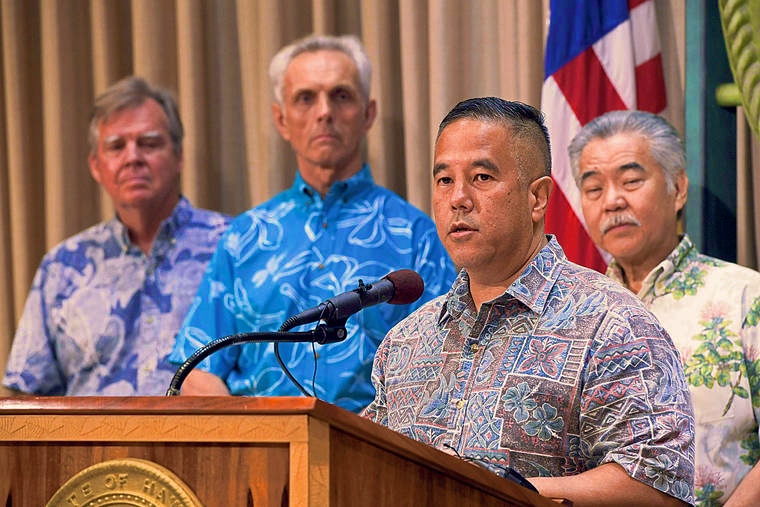
US Maj. Gen. Kenneth Hara, “incident commander” of Hawaii’s new coronavirus response warned the House Select Committee on COVID-19 today about the possibility of rioting if “we let the economy go the way it’s going.”

“At some point we need to accept risks,” Hara told his fellow members of the committee. “We’ve got to accept the fact that people will become infected” and push Hawaii’s health care system “without exceeding the ICU and ventilator capacity.”

By continuing to restrict Hawaii’s economy, Hara said:

“If we let the economy go the way it’s going, I feel there will be significant civil unrest that could lead to civil disobedience and, worst case, civil disturbance and rioting.”


Wednesday, May 13, 2020


FREE HAWAI`I TV
THE FREE HAWAI`I BROADCASTING NETWORK


"THE ILLEGAL US OCCUPATION IS STUMBLING"

Itʻs Happening Right Before Your Eyes.

Things Have Gone Off The Deep End In Hawai`i & You Know What?

No One Currently Running Things Has The Answer.

Watch This To See Why You Are The Answer & What You Can Do.


Then Share This Video Today With Your Family & Everyone You Know.

Friday, May 01, 2020

CORONAVIRUS REVEALS HOW BAD HAWAI`IʻS TOURIST PROBLEM REALLY IS


The past two months have shown the world just how utterly messed up it is—from inept leaders and politicians to smog-free days in Los Angeles, this virus has pulled back the curtain on the so-called wizards that make the choices that affect the lives of our planet and its people. It has revealed the greed and imbalance that has plagued us all for too long. Sadly, we probably won’t learn too much from this. China’s wet markets and the assault on wildlife will continue, white-collar workers will go back to spending hours each day commuting to do a job that can easily be done remotely, and our politicians will continue to fan the flames of bipartisanship, treating constituents like they’re one big experiment and using their lives as another way to benefit financially. For those of us in Hawaii, the global pandemic has exposed something else for our small, island state—it is utterly at the mercy of tourism and tourists, and that can no longer be the case.

Hawaii currently has the highest unemployment rate in the United States at 37%, with many still waiting to file claims because of overloaded websites and staffing shortages. That rate is usually lower than 3%, while the nation’s average unemployment is around 4.4%. Tourism accounts for approximately 20% of the state’s economy, though that number can be somewhat hard to rely on because tourism touches so many areas of the economy. It has been the largest industry in Hawaii since statehood in 1959.

In recent years, other major events, natural disasters, left huge impacts on Hawaii: the unprecedented floods in Kauai and the eruption of the Kilauea Volcano, both in 2018, had serious economic impacts on the affected communities. The past three years have made it clear that this sort of dependence on an industry that is so dramatically affected by a variety of external factors is dangerous for this state to rely upon.

Aside from the economic impact of so many of Hawaii’s people losing work because tourism gets shut down, Hawaii’s dependence on tourism has had a much more significant impact—it has emboldened the entitled to use it as their playground and quarantine getaway, with very little regard for its people.
The examples are numerous, and as much as I’d love to call out the woman who bragged on her TikTok about how empty and cheap her flight was from Boston to Honolulu, or the mommy blogger who brought her whole family to Maui during the pandemic and actively brushed off criticisms, I won’t—the internet has handled them for us.

However, I am more than happy to call out the marketing company that was dumb enough to bring their firm to Hawaii from Baltimore and actively brag about their callousness on their social media channels. Uprooted Platinum flaunted their work vacation and laughed about their private beach (though they didn’t actually have a private beach) while continuously violating quarantine restrictions. Since their brazen displays, they have taken down all of their social media pages and their website. So maybe they weren’t that great at marketing, after all.

And yet, they keep coming. One couple was arrested in Waikiki this week after flaunting their refusal to adhere to the current visitor self-quarantine all over social media, then hopping from hotel to hotel to avoid suspicion. That couple, who were from Las Vegas and Australia, were then sent home. Another couple from California was arrested in Waikiki after allegedly violating the rules for an entire week. Three others were arrested at a hotel pool in Hilo, visitors from Washington who violated quarantine. Those who are coming to Hawaii because they are homeless and want to ride things out in the tropics are being sent back to their place of origin (using funds from the Hawaii Tourism Authority).


Since Hawaii’s governor enacted mandatory 14-day quarantine restrictions on March 26, Hawaii has continued to see an average of 130 visitors per day. Compare that to this time last year when that number was 30,000 people per day and it seems like nothing, but it is still something. That means that 130 people each day have dismissed the health and well-being of Hawaii’s citizens for their own benefit and pleasure. And that is about as far away from aloha as one can get.

Maybe I should take a step back for a second because there has been a lot of information to unpack since this pandemic has started. Maybe you don’t understand why Hawaii residents don’t want visitors right now, why “Hawaii is Closed” adorns social media profiles as far as the internet can see. It’s simple, really: it’s about a lack of resources. Hawaii has 340 intensive care unit beds and 561 ventilators, the majority of which are on Oahu. On top of that, the supply lines in Hawaii are limited—we depend on air transport and a few ships each week to bring in goods; we don’t have those interstate-traveling big rigs that the rest of the U.S. can rely on. Our toilet paper and hand sanitizer shortages started at least a full week before people started hoarding in the continental U.S. We don’t have enough supplies for our own homes, much less vacation rentals full of tourists.

In addition to the lack of resources, reports of tourists waiting out the pandemic at the few resorts that remain open include awful experiences interacting with guests. One resort employee told local ABC affiliate KITV that “a guest from San Francisco used racial slurs and said hotel staff should be grateful that tourists give them jobs.” She said that guests are extending their stays, but are ignoring restrictions on where they can go. She also didn’t shy away from calling some guests “rude and abusive.”
So, you can see why Hawai‘i would prefer to be closed right now.

And try as they might, our state and local governments have not come up with a solution to keep visitors away. As a state, Hawaii has no authority to shut down federal air travel for visitors (though Oahu Mayor Kirk Caldwell and the mayors of Maui and Kauai, as well as the Hawaii Island county council, have asked the Trump administration, to no avail). They have, however, managed to shut down interisland travel, requiring all but a few types of people to enter 14-day quarantine while traveling to and amongst the islands (including residents). Visitors are required to quarantine in their hotels, while residents must stay in their homes. Before those measures were enacted, Hawaii residents took it upon themselves to send a message to tourists who tried to come during the pandemic by protesting at airports and along Honolulu’s highways.

Gradually, stronger efforts have been made. The Hawaii National Guard has been activated to help monitor checkpoints and screen visitors at the airport. The police are screening people as they try to enter certain areas, like the famed Hana Highway in Maui, ensuring that potentially sick visitors cannot access the remote parts of the island that have limited access to health care. State government is looking at limiting hotel reservations. Law enforcement is cracking down on violators. In early April, the Hawaii Convention and Visitors Bureau put out a request to 170 top publications and trade magazines, asking them to stop promoting Hawaii right now. And yet, they keep coming.


Vacation rentals have been designated as non-essential businesses in hopes of keeping visitors out, but it’s proving to be a lot easier said than done (which seems to always be the case when it comes to regulating vacation rentals). When visitors enter Hawaii, they fill out an agriculture form to help prevent unregulated plants and animals from entering. Now, these forms are being used to help track visitors and enforce the 14-day quarantine, but there are some serious flaws with that system—illegal vacation rentals have a regular address like any other home, so it’s difficult to identify them. New steps are being taken to research each individual and address, but plenty of people have fallen through the cracks already, setting up shop in Hawaiian homes (almost 70% of which are owned by people who live off-island), and skirting that 14-day quarantine.

You would think that the hotels would be easier to monitor, but that doesn’t seem to be the case, either. Hotel employees have told local media that many hotels are doing almost nothing to enforce the quarantine, basically limiting their participation in regulation to handing guests a piece of paper with state and local rules and leaving them to it. The lack of monitoring means that the 14-day quarantine is almost useless once a person arrives, though it has clearly served as a deterrent for most people who consider traveling to Hawaii. That said, one of the high-profile quarantine violation arrests this week was due to a hotel manager calling the authorities on the California couple that flaunted quarantine for over a week. Not everyone is out to make a buck at the risk of Hawaiian lives.

At the time of publication, Hawaii’s coronavirus cases were just over 604, with 14 total deaths. On Oahu, where the majority of the cases are, Mayor Caldwell just extended the stay-at-home order to May 30, with a few relaxations of requirements. Non-essential businesses are closed. Beaches are closed for lounging (though people can swim and exercise in the ocean). Some parks are soon to reopen for exercise, but most people don’t come here to exercise in our parks. Hotels are not allowed to operate restaurants, gyms, or pools. And yet, they keep coming.

Polite requests to not come to Hawaii, or at the very least to go through the mandatory 14-day quarantine, are not being heeded. Tourism is rearing its ugly head during this pandemic. This continued deep lack of respect for a place that isn’t just a vacation stomping ground, but a place of immense cultural, historical, and spiritual significance for the people who come from there and live there makes it quite clear that Hawaii needs to significantly pull back on its reliance on tourism. And of course, these issues are far from new.

But what does that mean for Hawaii? In addition to tourism, the top industries for the state include defense, agriculture, fishing, manufacturing, and power. Strengthening the defense industry in Hawaii is not something that many Hawaii residents will advocate for, and sadly power, especially green power, has proven to be highly problematic when it comes to the concerns of Hawaii’s people. Of the remaining industries, agriculture seems to be the top choice among politicians and citizens in giving Hawaii a fighting chance in shaking off the yoke of tourism.

Hawaii imports approximately 90% of its food, a number that continues to astonish those who live here and see the bounty that these islands can produce. There are more than 200 varieties of avocado that grow in Hawaii—and we’re not talking about those little Haas ones that people love. We’re talking indulgent, buttery fruits that can grow so big that they set Guinness World Records, like this 5.6 pounder did last year. Hawaii Island alone is home to 10 of the 14 microclimates of the world, many of which are wonderful for growing a variety of foods.

This shift is currently at the top of the to-do list for many lawmakers. One citizen, new to politics, is running for Mayor of Hawaii County (on Hawaii Island) and is advocating for greater agricultural initiatives. Ikaika Marzo also happens to be a tour guide operator.

“An event like this pandemic truly shows us how much our econmy [sic] relies on tourism, and as a local tour owner and operator myself, I’m here to say that is not right, not an ideal way for a county to be structured–we are so much MORE than our in-n-out tourists who spend money here. We have many other options that could still be booming right now, right through this pandemic, and could factor into helping the rest of the mainland US which had to temporarily cut off imports from foreign countries,” Marzo wrote on a recent Facebook post, a video of him walking around a deserted downtown Hilo and stopping at the local farmer’s market (ironically, a popular tourist attraction) while discussing agriculture.

In addition to focusing on other industries, Hawaii needs to put more effort into educating visitors to ensure that its people and places are receiving the respect that they deserve. The Hawaii Tourism Authority is working on long-term, strategic plans to focus on sustainability in travel as their primary concern, including greater investments in culture and natural resources, and considering local communities and their priorities more. Some in the tourism industry are even discussing implementing more models like the one at Hanauma Bay in Oahu that requires visitors to go through a short educational orientation and watch a video before entering the nature preserve. Hopefully, these ideas will continue to be developed and implemented to help address some of these issues.

While state politicians and decision-makers can’t change an entire economy overnight, visitors who take advantage of Hawaii’s top industry can change their behaviors and their attitudes so that it’s a little bit easier of a pill to swallow for the people whose culture and history has been stripped down and repackaged for maximum consumption by folks on holiday. Visitors should never expect that they have access to go where they want to go or that they can treat people like crap, no matter where or when they travel. Visitors should treat their destination with respect and reverence for the people and places that are their hosts. Just because you can get away with something, doesn’t mean you should still do it. Just because it’s legal or allowed, doesn’t mean it’s ethical.

So, if you hope to receive some of our aloha (which doesn’t come as part of the price of admission, no matter what those beckoning ads may say), it is imperative that you come here ready to share some aloha of your own.

Hawaii has a long way to go before it can even partially extract itself from suckling so strongly at the teat of tourism, but it has never been given a better time to start than now. One thing has been made clear: though many people are suffering at the loss of their jobs, those dolphins and whales that visitors come to visit certainly don’t miss them. Marine life is flourishing as residents and visitors can no longer snorkel, scuba dive, or play amongst the reefs, and that needs to be taken very seriously by all of us, visitors and residents alike.

So come back to Hawaii, eventually. You’ll need a vacation when this is over, and many of us want to welcome you. Just don’t be too surprised if our aloha continues to wear thin if some changes aren’t made, starting with you.

Thursday, April 30, 2020

FROM YESTERDAYʻS FREE HAWAI`I TV - "TO REBUILD THE ECONOMY, FOCUS ON A HAWAI`I-GROWN INFRASTRUCTURE"


Honolulu Civil Beat - April 26, 2020 - By Koohan Paik-Mander

The Hawaii House of Representatives Select Committee on COVID-19 Economic and Financial Preparedness has announced that it has been holding briefings with business, government, nonprofit, and labor leaders for several weeks to plan for a post-coronavirus economy in Hawaii.

Then, on April 8, Gov. David Ige introduced Resolution No. 54, which establishes the related Hawaii Economic and Community Recovery task force.

House Speaker Scott Saiki offered his full-throated support -

This pandemic has reaffirmed what we have known for awhile — that our economy must be diversified and cannot be over-reliant on one or two major industries. This task force must help modernize our economy. The future of our families and state relies upon a sound and resilient economy.

We, the undersigned (see below), are concerned that there are no farmers, or groups that represent Native Hawaiians and everyday working people on the task force that will determine our collective economic future.

It is critical to examine what Saiki means when he talks about a “sound and resilient economy” for Hawaii. We cannot turn a blind eye to the fact that unemployment claims nationally have ballooned to 26 million as of April 23 and are still growing.

Wildcat strikes are flaring up across the U.S., and businesses are folding by the thousands. And the cascading effect is just beginning.

The world as we have always known it, is unraveling. We are heading toward no less than a second Great Depression, with no way of knowing how to predict what a post-pandemic world would even look like.

However, we know one thing for certain: that Hawaii’s first priority is to get to feeding itself, as quickly as possible. Right now, Hawaii imports 90% of its food, which is growing scanter by the week as supply chains fizzle out, under the pressure of a pandemic-crippled global economy.

Change Must Be Strategic

We also know that it is very much in the realm of possibility that we may be slammed by another freak event just as unforeseen as COVID-19. It may be a climate event. It may be a political event. It may be another pandemic, or perhaps a series of pandemics, as has been predicted.

Given the reality that it is unlikely that we can ever go back to “normal,” it is of utmost urgency that the first step in rebuilding a post-pandemic economy is to focus entirely on building a Hawaii-grown infrastructure focused on feeding Hawaii. That would ensure that, regardless of what disaster comes our way, at least we will have laid the groundwork for maximum resiliency, to avoid widespread starvation in Hawaii.

Such a food-security infrastructure would include massive education funding, capital improvement projects, and support for all aspects of regenerative farming, which if done correctly, diverts waste from the landfills and produces healthy soil that captures carbon from the atmosphere. It would also mean a living wage for all, and would help to strengthen the economic vitality and resiliency of rural communities.

Token actions will not suffice. Change must be strategic, systemic and wide-sweeping, and on an order of magnitude equal to the Great Mahele. We must mobilize immediately to create jobs and policy that will serve our people now, as well as over the next seven generations.

The Green New Deal, with agriculture as Hawaii’s “jewel in the crown,” is the best approach to creating a thriving food-secure economy. It would support a livable planet by creating an inclusive, decentralized, equitable economy that considers environment, labor, education, disability rights, women’s rights, veterans’ rights, and others.

No one should be compelled to work at a job that harms either their health, the health of their family, or the health of the planet. Such an economy would embrace the wisdom of native peoples, and their rights, as clearly set forth in the UN Declaration on the Rights of Indigenous People.

These multiple facets are often viewed as “pesky obstacles” from a corporate, profit-margin perspective, but that short-sighted paradigm has proven to be severely flawed. Now, we must think holistically and include the diverse needs of Hawaii’s own local communities first, rather than profits. This, by its very definition, is the fabric of resiliency.

Now is the time to craft an economy that works for everyone. Hawaii is already home to thousands of farmers; we must support them, instead of providing sweetheart deals to out-of-state corporations.

Our own farmers know, better than anyone, what they need to do to grow healthy local food. Yet farmers’ voices are rarely at the table in the halls of power. You will find many of those voices signed below.

Hawaii Can Feed Itself

Further, we must support an education infrastructure that supports young people to prosper by studying regenerative agriculture, such as offering tuition-plus-stipend for agriculture students. Hawaii can feed itself, if we want to do so.

Simply put, COVID-19 and other potential pandemics are sending us into uncharted waters. If we care about Hawaii’s future for all her people, we must build an infrastructure of regenerative agriculture right now that provides a livable wage to island families.

This would be the required foundation for a modernized economy. This would be how to truly support local farmers and all the associated peripheral businesses – suppliers, value-added cottage industry products, cafes, restaurants, etc.

Last year, members of the caucuses for the environment, labor and education of the Democratic Party of Hawaii came together to form the Green New Deal working group. We drafted 27 bills distributed among eight sectors. In addition to agriculture, sectors included ecosystem restoration, education, energy, waste management, health and human services, housing, and transportation.

Each Green New Deal bill was prefaced with the following preamble (adjusted to include “pandemic” as one of the climate-induced global crises):

The Legislature finds that the human-induced global climate crisis requires thoughtful but bold response on many fronts to make Hawaii communities resilient to the impacts of pandemics, storms, floods, fire, and sea-level rise that threaten the very survivability of these fragile islands.

Lest Hawaii lose its leadership position in meeting the future, and in the arenas of labor, justice and equity, the Legislature embraces Aloha Aina to decarbonize Hawaii’s systems of food, energy, and transportation, and to sequester carbon through systems of agriculture, waste management and ecosystem restoration.

The good jobs created thereby also expand access to health, housing and education, ensuring justice and equity for Hawaii’s citizens. The following measure represents a forward step in mitigating and adapting Hawaii to inevitable change.

We, the undersigned, request that Resolution 54’s economic task force make the Green New Deal central to its strategic plan. We also request that the task force and its Special Committee include regenerative farmers, indigenous groups, zero-waste experts, and members of the Democratic Party of Hawaii Green New Deal Working Group.

For more information about the Just Transition Hawaii Coalition, please send an email to koohanpaik@gmail.com.


The Just Transition Hawaii Coalition - Kawika Pegram, executive director, Hawaii Youth Climate Coalition; Lanakila Mangauil, executive director, Hawaiian Cultural Center of Hamakua; Hector Valenzuela, Vegetable Crops Extension Specialist, UH Manoa; Ku Kahakalau, indigenous educator, Waipio Valley; Nalei Kahakalau, traditional kalo planter, Waipio Valley; Jason Bradshaw, Hawaii Democratic Party Labor Caucus, Chair; George Kahumoku, Native Hawaiian planter of over 300 varieties of fruits, veggies, laau lapaau herbs and teas, rancher of cattle, sheep, goats chickens and ducks, cultural practitioner, five-time Grammy winner; Kealia Farms dba Kahumoku Farms, Lahaina, Maui; Samuel and Tyrell Kapoi, SK Global Inc. – Kalo Bombs, ‘Ohana O Hāloa, Puea, Waianae; Nalani Kaneakua, Limu Farmer/Koʻolau Limu Restoration Project, Anahola, Kauai; Kapena and Ku‘ulei Worden, Worden ‘Aina Farm, Waianae; Lana Olson, Hawaii Democratic Party Environment Caucus Chair; Jeff McKnight, Hawaii Democratic Party Environment Caucus Secretary; Yoshito L’Hote, executive director, ‘Aina Hookupu o Kilauea, Kauai; Meleana Judd-Cox, farm manager, Waihuena Farm, Oahu; Koohan Paik-Mander, Pacific Earth Institute, Hamakua, Hinaleimoana Wong-Kalu, kumu and community leader, Oahu; Hawaii Ulu Producers Cooperative (over 90 farms), Hawaii Island; Jenny Pell, Board member of Food Security Hawaii, and Project manager of ‘Ohana Gardens, Maui; Bryan and Natalie Mesa, De La Mesa Farms, Waimanalo, Kristine Kubat, president, Recycle Hawaii, Hilo; Ikuko Kay Kurata, farmer and beekeeper, Hawaii Makoa, LLC, Hamakua; Steve Dias, farmer/rancher, Dias Farm and Ranch, Hamakua; Anna Maria Kapua, farmer/rancher, Dias Farm and Ranch, Hamakua; Robert Kapua, farmer/rancher, Dias Farm and Ranch, Hamakua; Colehour Bondera, farmer of Kanalani Ohana Farm certified organic, Board of Directors of Kona Coffee Farmers Association President, Board of Directors of American Origin Products Association Board Member of Kona County Farm Bureau; Bruce Corker, farmer of Rancho Aloha organic coffee farm; Chet Gardiner, Cassandra Farms, Honomalino, vice president of Kona Coffee Farmers Association and member of Farmers and Ranchers for a Green New Deal; Ikaika Hussey, UNITE HERE Local 5 organizer, founder of ‘Iliʻili, a multi-stakeholder cooperative working on strengthening Hawaii’s economy through investments in decarbonization, food security and smarter urbanism, Kalihi, Oahu; Leilani Lindsey-Kaapuni, president of Hui Aloha ʻĀina; Lisa Hinano Rey, Agroforestry Farmer, Policy Entrepreneur, STEM Educator, Windward Community College, Oahu; Janine Holstein, farmer/owner, Maui Majesty, Kula, Maui; Dash Kuhr, Starseed Ranch, Kohala, Hawaii Island, Becky Gardner, candidate for House District 20, St. Louis Heights, Palolo, Maunalani Heights, Wilhelmina Rise, Kaimuki; Jeremy Hillstrom, True Leaf Farms Inc., Moloaa, Kauai; Bradford Ikemanu Tin Cheong Lum, Kumu Hula and Kahu, Halau Hula O Ikemanu, Honolulu; Bart Dame, Democratic National Committeeman for Hawaii; Fern Anuenue Holland, Kauai; Shannon Schultz, BEEing Aloha Honey Co., Hawaii Island; Carl McKinney, Farmer, Hawaii Island Goat Dairy, Honokaa; Kim Coco Iwamoto, Enlightened Energy, LLC; Rev. M. Kalani Souza, cultural practitioner, Paauilo; Raymond Catania, labor advocate, Kauai; Ana Nawahine-Kahoʻopiʻi, Kumu hula, DHHL beneficiary, backyard farming design, Kupuna Council of Aloha Aina Party; Blake Watson, Regenerative farmer and organic land manager, Glenwood, Hawaii Island; Maritez Libed, farmer, Tess Garden, Paauilo, Hawaii Island; Lori Beach, Executive Manager, Hamakua Agricultural Cooperative; Yuri Zhuraw, Farmer, Food Forest Farm, Honokaa; Nancy Redfeather, farmer, Kawanui Farm, Honalo, Hawaii Island; Aunty Maxine Kahaʻulelio, Pastoral leaseholder, rancher, DHHL beneficiary, Kupuna Council of Aloha Aina Party; Albert Kahoʻopiʻi Jr., pastoral rancher, farmer, vertical growing designs, DHHL beneficiary; Ponoʻi Kahoʻopiʻi, farmer, vertical growing designs, DHHL beneficiary; Katy Benjamin, Barenaba Farm, Hiio; Daniela Spoto Kittinger, director of Anti-Hunger Initiatives, Hawaii Appleseed Center for Law and Economic Justice; Fiona Fong Weingartner, School Garden Educator, Honokaa; Tanya Yamanaka Aynessazian, Backyard farmer, Keaau, Hawaii Island; Jess Sobocinski, FoodCorps Hawaii Program Manager, Michael Manor, farmer, Mother Nature’s Miracle, Hamakua; Laura Markham, Big Island Creamery, Waimea, Hawaii Island; Kaitlyn Jacobs, Legislative Coordinator, Surfrider Foundation, Oahu chapter; Young Progressives Demanding Action, Honolulu; Henry Curtis, Life of the Land, Oahu; Axel Kratel, Carbon-capture regenerative farmer, Hilo; Tina Grandinetti, Hawaii Peace and Justice, UH Manoa; Joshua Cooper, Hawaii Institute for Human Rights, Kapahulu, Oahu, Noel Kent, Department of Ethnic Studies, UH Manoa; Thayne Taylor, Kauai Sea Farm, Kalaheo; Gerald Klappert, Farmer, Wailuku, Maui; Jack Lockwood, Puhau St. Farmers League, Hilo; Mille Kohl, Haiku, Maui; Michael deYcaza, Honolulu; Luella Nohea Crutcher, Waawaa, Oahu; Mark Chavez, climate justice advocate, Oahu; Lori Adolewski, Kaneohe, Oahu; Eric Bowman, Hamakua; Tina Wildberger, House District 11 Representative, South Maui.

Wednesday, April 29, 2020

FREE HAWAI`I TV
THE FREE HAWAI`I BROADCASTING NETWORK


"WHAT WILL BE HAWAI`IʻS NEW #1 INDUSTRY?"

It Was Tourism For Decades.

But Because Of Covid-19 There Will Now Be A New Normal.

The New #1 Industry Is Something Anyone Can Do.

Watch To See What It Is & How You Can Help Create A Hawai`i Economy That Works For Everyone.


Then Share This Video Today With Your Family & Everyone You Know.

Friday, April 24, 2020

BEEN THERE, DONE THAT

Thursday, April 23, 2020

LAWMAKERS LOOKING TO DIVERSIFY HAWAI`IʻS ECONOMY AWAY FROM TOURISM


KHON2 - April 21, 2020

The COVID-19 pandemic has been a major hit to the tourism industry and businesses that rely on it. Now lawmakers are looking into other ways to bring in money to the state in the future, looking for ways to break away from relying solely on tourism. They say now is the perfect time to start.

“It’s only when we have situations that we are facing today where we really look at what the future should hold,” said Sen. Glenn Wakai, Senate Energy, Economic Development and Tourism Committee chair.

Some of the proposals for alternative economic developments include expanding agriculture, which is something Hawai`i is familiar with.

“We’ve talked about agriculture. We’ve talked about value added products and exporting, and those are the kind of jobs that we can get people moving quickly,” said Sen. Donovan Dela Cruz who represents Wahiawa and Mililani Mauka.

But Wakai is proposing something a bit different. He’s looking into the future with aerospace technology, aquaculture and alternative energy.

“We import 70 percent of the fish we eat in Hawai`i. That is a startling statistic. We should be a net exporter of fish, crustaceans, [and] ogo seaweed,” said Wakai
But these developments will take some time. Wakai estimates it could be about five to ten years of planning before we can reap the benefits.

“I don’t have the magic wand that by 2025 we’re going to have a robust [innovative] economy, but I’d like to try and move this discussion passed theoretical to, you know, on the ground, let’s move dirt. Let’s throw money at it. Let’s find great minds together to come up with reinventing the entire economy,” said Wakai.

For right now, he said they have to figure out how it would work and how much money and resources they’re willing to put in.

“It’s a push and pull. That means we’ll probably have worse roads, education might take a hit, healthcare…. we have a lot of things to weigh in government as to what our priorities are,” said Wakai.

Sen. Wakai, as well as the Chamber of Commerce, will be presenting their ideas for reopening the economy and moving forward in a webinar on Friday.

Wednesday, April 22, 2020

FREE HAWAI`I TV
THE FREE HAWAI`I BROADCASTING NETWORK


"DOES HAWAI`I EVEN NEED TOURISM?

Last Week We Reported About A Golden Opportunity For Hawai`i Tourism.

Many Of You Responded With Your Own Thoughts & Opinions.

From Your Feedback Thereʻs One Thing You Said Again & Again.

Watch This To See What It Is & A Solution That Can Work For Everyone. 


Then Share This Video Today With Your Family & Everyone You Know.

Tuesday, April 21, 2020

COVER YOUR MOUTH

Wednesday, April 15, 2020

FREE HAWAI`I TV
THE FREE HAWAI`I BROADCASTING NETWORK


"WHAT IS HAWAI`IʻS GOLDEN OPPORTUNITY FOR TOURISM?

A New Study Reveals Two Critical Steps To Re-Starting Tourism In Hawai`i.

But In Doing So Thereʻs A Very Rare Golden Opportunity.

It Means Creating The Kind Of Tourism We Want Instead Of What Weʻve Had.

Watch This To Learn What That Is & Why Itʻs Something Hawai`i Could Teach The World.


Then Share This Video Today With Your Family & Everyone You Know.

Thursday, April 09, 2020

PUTTING HAWAIIANS AT RISK SINCE 1778
 

Wednesday, April 08, 2020

FREE HAWAI`I TV
THE FREE HAWAI`I BROADCASTING NETWORK


"THE REAL MEANING OF ALOHA"

Itʻs Times Like These That Make It A Challenge To Express Aloha.

How Can It Be Done When Everyoneʻs Told To Stay Six Feet Apart?

The Answer Lies In Discovering A Much Deeper Meaning Of The Word.

Watch This To Learn Why Aloha Is A Way Of Being Rather Than Just A Greeting.
 

Then Share This Video Today With Your Family & Everyone You Know.

Wednesday, March 25, 2020

FREE HAWAI`I TV
THE FREE HAWAI`I BROADCASTING NETWORK


"HOW YOU CAN HELP PROTECT HAWAI`I"

Everyoneʻs Asking The Same Question.

Why Did It Take So Long?

Now Thatʻs Itʻs Finally Happening, Hereʻs Whatʻs Next.

Watch This To See What You Can Do To Protect Our People & Home.


Then Share This Video Today With Your Family & Everyone You Know.

Tuesday, March 24, 2020

NO DISEASE PLEASE