Showing posts with label Mauna Kea. Show all posts

Monday, April 06, 2026

AFTER MERRIE MONARCH


 

Tuesday, November 25, 2025

HAPPENING THIS FRIDAY


Tuesday, March 21, 2023

BE THERE SATURDAY


Friday, March 17, 2023

DONʻT MISS THIS ONE


Wednesday, February 23, 2022

FREE HAWAI`I TV
THE FREE HAWAI`I BROADCASTING NETWORK


"WHY IS RED HILL MORE IMPORTANT THAN MAUNA KEA?"


You May Not Like It, But Itʻs True.

Thereʻs A Very Good Reason Why It Is.

Messed Up? Unfair? Even Crazy? Yes To All Three.

Watch Our Report To Discover The Reason & The Solution.

Then Share This Video Today With Your Family & Everyone You Know.


Tuesday, May 11, 2021

BE THERE THURSDAY - HELP PROTECT MAUNA KEA & KAHEA


Friday, April 16, 2021

MAUNA KEA PROTECTORS WARN US FEDERAL GOVT. NOT TO PUSH FEDERAL RECOGNITION


Thursday, April 15, 2021

MAUNA KEA HUI TO US DEPT. OF INTERIOR - "HAWAIIANS ARE NOT A TRIBE"


SIGN THE PETITION - HawaiiansAreNotATribe.com

Thursday, March 04, 2021

NEW DOCUMENTARY CENTERS PROTEST, POETRY & THE FIGHT FOR NATIVE HAWAIIAN SOVEREIGNTY
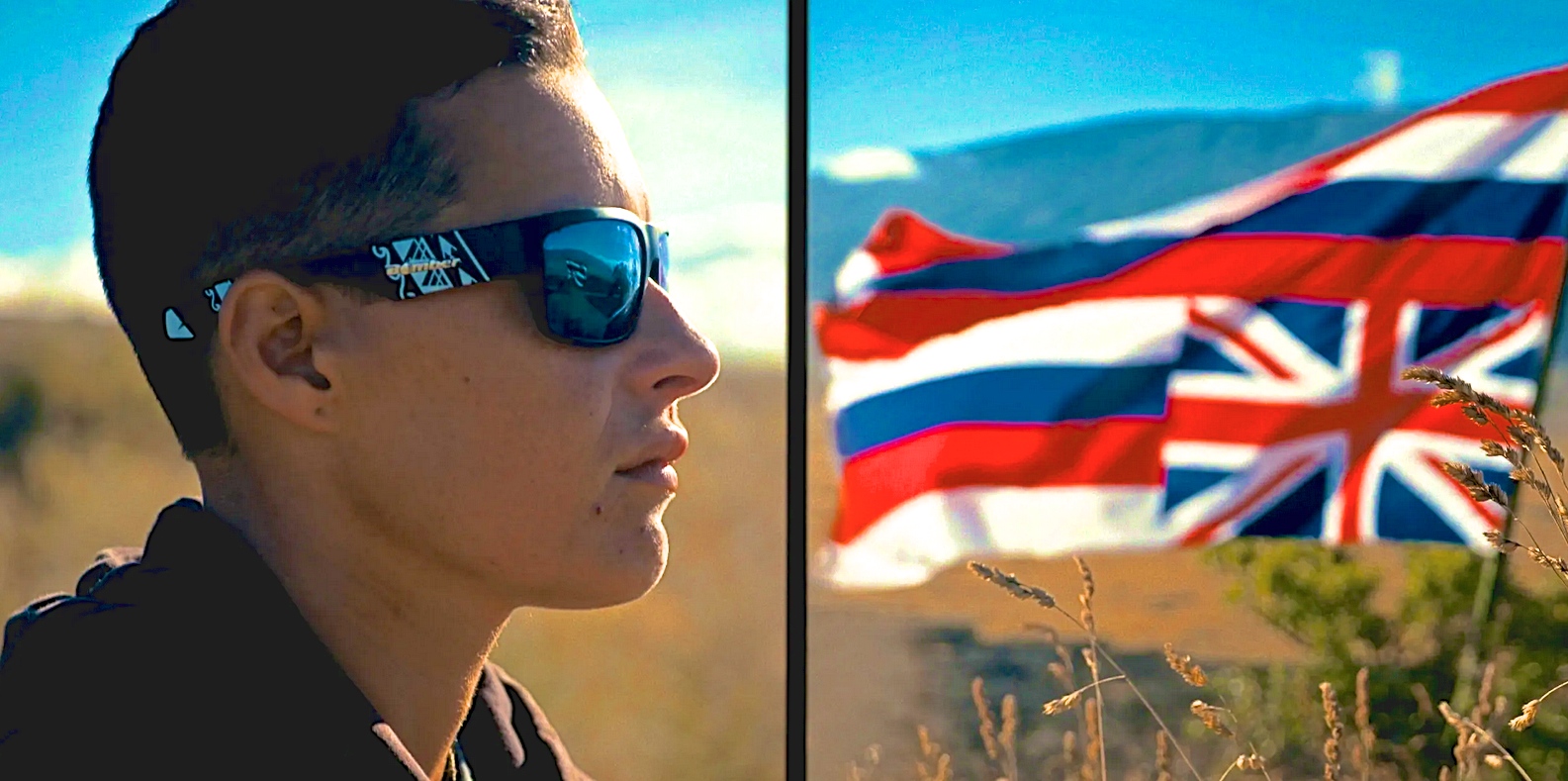


 Vogue - February19, 2021 

This Is the Way We Rise begins under the cover of darkness with eight Native Hawaiian activists huddled together against the bitter Mauna Kea cold, against the state enforcement agents barreling towards them. The activists were protesting the proposed construction of the Thirty Meter Telescope (TMT) atop Mauna Kea, a dormant volcano on the island of Hawai‘i valued for decades by the astronomical community for its unhampered view of the universe. If built, the TMT would be the largest visible-light telescope on the mountain, dwarfing the 13 other telescopes already occupying Mauna Kea’s slopes.

For Hawaiians, Mauna Kea is more than just a mountain. It is a sacred site, the piko or center of where Wākea (the sky father) and Papa (earth mother) meet, a solemn place not only in Hawaiian cosmology but in the stories of cultures all across Polynesia. The eight activists—or kia‘i (protectors), as they are often called—were there to make a statement. As long as they remained standing, the TMT would not be built.

Among the kia‘i that day was Jamaica Heolimeleikalani Osorio, the poet and activist at the film’s center. A decade earlier, at just 18 years old, Osorio was heralded as a voice for the next generation of Native Hawaiians. Her poems, delivered in her now characteristic cadence of vulnerability and strength, vividly captured the experience of being queer and kanaka maoli, or Native Hawaiian, in a political climate that was often hostile to both parts of her identity.

The veracity of her poetry won her accolades and applause. It captured the attention of prominent audiences, including President Barack Obama and an enraptured first family during the White House’s inaugural Poetry Jam. But by the start of the film, poetry and performing had lost their luster for Osorio, who by then had not written a poem for three years.

“Not only did it feel like a chore and even, like, a pressure to produce for other people,” Osorio recounts in the film, “but I felt like I had run out of things to say.”

In This Is the Way We Rise, which was chosen to be screened at this year’s Sundance Film Festival, Osorio’s internal conflict is set against the backdrop of the fight to protect Mauna Kea, a protest that at its height drew thousands of demonstrators to Hawai‘i’s highest peak. As we watch the growth of this movement, so too do we witness Osorio reclaim her voice.

I speak with Osorio and director Ciara Lacy, who this year became the first female Native Hawaiian to be shown at Sundance, about this cross section of creativity and activism, the longstanding effects of colonization, and how Native peoples can help save us from the current climate catastrophe....


Click HERE To Read The Entire Interview

Tuesday, March 02, 2021

ANNOUNCEMENT - ROYAL ORDER OF KAMEHAMEHA


February 28, 2021 


Aloha kakou, 

On behalf of the Royal Order of Kamehameha 1 I would like to make known our position regarding the Mauna Kea "table" being proposed by Sen Saiki & the hawaii state legislature. The Royal Order of Kamehameha 1 will not seek nor accept a seat at this table. The Royal Order of Kamehameha 1 will continue to monitor all actions concerning the Lahui and especially Mauna Kea. The Royal Order of Kamehameha 1 does not believe that this "table" is a pathway to a viable solution. Please share this message with our beloved people and all concerned parties. Be safe in kapu aloha, God save the Kingdom, 


Alii Paul K. Neves KGCK 

ROOK 1 Alii Nui Appointed Representative For Mauna Kea

Tuesday, December 08, 2020

WANT THE LATEST MAUNA KEA & IWI KŪPUNA NEWS?


Thursday, February 06, 2020

TEACHING TOURISTS THE REAL HAWAI`I

New York Times - February 4, 2020


Credit...Marco Garcia for The New York Times

Locals in O`ahu know that the best way to get from Waikiki’s crowded beaches to the cool North Shore is to drive along the island’s eastern coast. The road is framed by mountains, ocean and greenery so lush and beautiful, it’s hard to focus the eye on one place for too long, for fear of missing the next scenic attraction.


On a recent trip along the route, something else stood out: the upside down Hawaiian flags flying at almost every stop.

The flag, which has the union jack in the bottom left corner, instead of the usual top left, hung in storefronts in Waikiki and was printed on T-shirts in Waimanalo, it was stuck on the bumpers of passing cars in Kailua and flying from the backs of trucks in Kahuku and other towns on the North Shore.

The flag has become a symbol of solidarity among Hawaiians who oppose the construction of a large new telescope on Mauna Kea, on the island of Hawai`i. Mauna Kea, at 32,000 feet from seafloor to summit, and with 13,796 feet above sea level, is one of the best places in the northern hemisphere, if not the world, to observe the cosmos, experts say. The telescope’s proponents say that it will bring hundreds of jobs to the island and advance humanity’s study of space.


But it has faced fierce resistance from some native Hawaiians for whom Mauna Kea is sacred ground and a place of roots, and their allies. Opponents of the telescope say they are tired of having their land taken for purposes that benefit others and for the often elusive promise of jobs that fail to deliver in terms of numbers or a living wage.


Credit...Marco Garcia for The New York Times
“The struggle at Mauna Kea right now is one of the biggest issues that has realigned many cultural political relationships in Hawai`i,” said Kyle Kajihiro, an activist and lecturer at the University of Hawaii at Manoa. “It’s really quite an amazing emergence of Hawaiian activism of cultural awareness.”

The battle over the telescope has revealed fissures that have long existed in Hawai`i, a place that is all but synonymous with tourism — the most-popular destination for honeymoons in the United States and a bucket-list perennial. The fight has inspired actions around the islands, all relating to how land is used and who benefits from it.

Continue reading the main story
The spirit of protest is most visible in O`ahu, where in Kahuku demonstrators have spent the last several months fighting the construction of eight wind turbines, each standing at 568 feet — taller than the tallest skyscraper in Honolulu. Protesters say the turbines will have adverse long term health effects on the population. The company building them says there is no evidence to support those claims and promises to bring jobs to the area. More than 160 people have been arrested there.


In southeast O`ahu, in September, 28 people were arrested trying to block the building of a park and recreation center in Waimanalo, a largely agricultural town. The developers behind the center say it will bring jobs and create a new community space, but opponents fear it will be a magnet for tourists and will destroy the forest and beach used by locals.

In Honolulu, in May, Hilton employees protested, demanding a better contract and job protections. In July, hotel employees went on strike to protest what they said were low wages and the firing of 45 workers by Diamond Resorts, an operator of multiple properties in the United States and Europe. The company said it would turn one of its hotels into a timeshare resort, which requires fewer workers than a traditional hotel.

“We value our dedicated team members at The Modern Honolulu and we were pleased to reach a contract agreement that includes a significant pay increase,” a spokesman for Diamond said. “We are continuing our planned efforts to convert the property into a world-class vacation ownership resort.”

Most people in Hawai`i, especially in the tourism industry work more than one job to barely get by, said Bryant de Venecia, communications organizer for the workers’ union, Unite Here Local 5, which represents resort workers.

“Mauna Kea has lit a fire for Hawaiians who are tired of watching their land, resources and work be used at the expense of their well-being,” he said.

Hawai`i is the most expensive state to live in, according to the 2018 Annual Average Cost of Living Index by the Council for Community and Economic Research. Groceries, for example, cost more than 60 percent the national average.  Continue reading the main sto 

“People are tired of being decorative — Hawaiians as well as people who live in Hawai`i,” said Maile Meyer, who owns Nā Mea Hawai’i, a bookstore in Honolulu that sells products from smaller local makers. “You’re seeing a phenomenon of natives gathering again and completely finding our way back to each other as part of the solution.


Credit...Caleb Jones/Associated Press
A common thread between these protests is that they are being led by locals. They say that since Europeans first arrived in the 18th century, Hawaiian land has been taken and misused by non-Hawaiians, and often to the detriment of Hawaiians and their traditions. The endeavors that have sparked these recent protests all promise jobs, just as tourism and defense have in the past.

But perhaps for the first time in recent Hawaiian history, natives and locals are saying the quality of these jobs is not good enough.

“We’re having to move away from quantity to quality,” said Laurien Baird Hokuli`i Helfrich-Nuss, the founder of Conscious Concepts, a company that works with local organizations on sustainable tourism initiatives. “Now that local people are getting more agency, they are learning more, going into a more curious space of saying ‘It’s great that this company is providing jobs, but what kind of jobs are they? Are they good jobs? Are they paying a livable wage?”

Tourism is the biggest driver of Hawai`i’s economy, accounting for 21 percent of jobs. Nearly 10 million people visited the state in 2018 and in 2019, guest arrivals were expected to surpass that number, hitting a record high. And although more people are visiting Hawai`i, they are spending less there.
   Continue reading the main sto 
Locals say that resorts are often owned and run by non-Hawaiians, with Hawaiian people employed in the lower-paying service jobs, and that development often benefits outsiders at the expense of native and local well-being.

“There historically hasn’t been enough consideration for how tourism and tourists can contribute to making life sustainable and really livable for the locals who serve them here,” Mr. de Venecia said.
The feeling of escape — of fleeing to a nearby paradise with stunning beaches and luxurious resorts — has long been Hawai`i’s appeal to the traveling public. While the hottest trends in travel now are the search for authenticity and ways to experience local life, many people who visit Hawaii are looking to get away from daily life. They come to sit on the beach and drink a matai without thinking about much else. Their interaction with local culture is often limited to watching a hula show at the hotel luau.

“We realized a lot of folks who would visit us who would normally have more consciousness about history and social justice concerns seem to turn off that part of their brain when they think about Hawai`i,” Mr. Kajihiro, the activist and lecturer, said, adding that people treat the islands as a “play land.”

But this decision to turn off their brains is hurting Hawai`i and Hawaiians, he said. While working for the American Friends Service Committee, the Quaker peace and justice organization, Mr. Kajihiro and his colleague Terrilee Keko`olani studied the environmental and social effects of colonization, militarization and overdevelopment of Hawai`i. They learned that tourism was one of the industries with some of the most damaging effects on O`ahu, he said, citing overcrowding, a higher cost of living and higher prices for goods.

The pair began offering alternative tours of the island, which they call DeTours, in 2004 and have seen increased interest in recent years. Their work was included in the recently published Duke University Press book “DeTours: A Decolonial Guide to Hawai`i,” a collection of essays, interviews and family histories about ethical and contextualized tourism in the islands.

The tours are given to groups of people who want to learn about Hawai`i from the perspective of local Hawaiians. They include a deep history on the ways military life is hidden across the island. During a typical tour, guests go to `Iolani Palace, the Hawaiian royal residence, then to Chinatown and some of the old neighborhoods where new immigrants to Hawai`i traditionally settled. The next stop is usually Fort Shafter, the headquarters of the United States Army Pacific; then Camp Smith, but the main part of the tour is Ke Awalau o Pu`uloa — Pearl Harbor.Continue reading the main sto   

During a DeTours of Pearl Harbor, Mr. Kajihiro pauses in the “Oa`hu court” between the Pearl Harbor galleries and the museum and asks guests to look at the placards in the hallway. At the placard that says, “The Hawaiian Kingdom was overthrown in 1893,” he explains that this one sentence has been controversial with the United States government because it acknowledges the government-backed overthrow of Queen Lili`uokolani, which unsettles American claims to Hawai`i. In the museum’s Attack Gallery, Mr. Kajihiro points to a small image of the Hono`uli`uli internment camp where Japanese people were held during World War II and uses it as a jumping-off point for a conversation about immigration and civil rights.

“People already come here with so many images and ideas about what Hawai`i is that it’s really hard for them to see something different, so that’s why we started calling our work ‘DeTours,” Mr. Kajihiro said. “To swerve off the path that most people are going to see or understand and consume and shake it up by raising some more critical perspectives and introducing a lot of historical facts that are not so pleasant.”
The DeTours team is part of a movement looking to change what tourism means in Hawai`i. Ms. Nuss, of Conscious Concepts, is originally from O`ahu and returned in 2009 after working in hospitality in the Caribbean, New York, Miami and other places on the United States mainland. 

“I came home seeing something happening in Hawai`i that I didn’t see when I left,” she said. “My generation was stepping into their leadership roles and doing it differently, reconnecting for a movement back to the land.”

But she quickly realized that what many companies were doing didn’t align with her vision for supporting tourism while ensuring the well-being of overworked Hawaiians.

In 2015, Ms. Nuss created her company to find ways to support Hawaiian businesses function sustainably while also remaining a key part of the most important sector in O`ahu — tourism. Ms. Nuss has worked with farms, artists and nonprofit organizations to change their offerings so they can appeal to tourists, while still benefiting Hawaiians. A farm hoping to attract tourists to volunteer might turn to her to figure out the best ways to reach them. She described her work with as “consciously creating experiences for travelers and opportunities for locals.”

“I had a realization about how our tourism industry is presently run, which is coming from the commodification of culture,” she said. “I realized what was happening in my communities and the value systems that were driving it were contradictory to the form of tourism that I was being a part of.

”Continue reading the main stTo give tourists a more authentic experience of “the real Hawai`i,” the artists Roxy and Matt Ortiz, invite them into their studio in the Kaka`ako district of Honolulu. The couple is known for their elaborate murals of fanciful tree houses, which they create under the name Wooden Wave.

“When people come see us work, it gives them a totally different way to experience Hawai`i,” Ms. Ortiz said. “And it’s a fun way for us to give tourists a different experience than they usually see in those brochures.”

In these studio visits, guests can see the couple’s work in progress, but also learn about ahupua`a, the ancient system of land division, in which the island was separated into slices, each slice running from the top of the local mountain to the shore. During the visit, Mr. Ortiz explains that each ahupua’a included forest area up high and a cultivated area below, and depending on the politics and economy of each ahupua`a, its size was different from another.

Mr. Ortiz said that even the slightest opportunity for tourists to think about how water and land have always worked together and why they hold importance to Hawaiians can encourage them to be more thoughtful when interacting with locals and the land and sea while visiting.

“When people have some of the history and context they can appreciate the art more and they can experience the island in a more meaningful way,” he said.


Credit...Marco Garcia for The New York Times
Another way tourists can learn about the land and engage with locals is by visiting a local farm like Kahumana Farm in Waianae on the west side of O`ahu.Continue reading the main stor 

In November, Chloe Anderson, a therapist and teacher in California, visited the farm and stayed for four of her six days on O`ahu. There she shared a room with others, did yoga, learned about the produce grown and cooked on the farm and generally felt like she got a more meaningful experience than she would have at a luxury resort, removed from daily Hawaiian life.

“We had like three or four different activities we would do every day,” she said. “But so many things were based off the farm and at the farm. We still had the experience of being a tourist in Hawai`i and going on hikes and beach excursions, but also of experiencing something more.”

Some business owners are committed to staying in the tourism sector, and are trying to be as environmentally friendly as possible.


Credit...Marco Garcia for The New York Times
“I don’t think it’s reasonable to expect that people just won’t work in the main industry there is and I don’t think Hawaiians want to stop tourism altogether, but we are all working to find ways of doing it responsibly and thoughtfully,” said Shane Hiroshi Gibler, who co-owns Royal Hawaiian Catamaran, which is based in Honolulu and offers snorkel tours, sunset cruises and private charters.

On Mr. Gibler’s boat, guests are asked not to bring any plastic and recycling is available aboard. Mr. Gibler educates guests an education about fishing, food and the importance of the ocean and the land to Hawaiians. The Royal Catamaran team regularly gathers people to clean up the shoreline and has been working with the Surfrider Foundation to remove ghost nets — fishing nets that have been lost or left behind by fishing boats — from reefs or the ocean.

The idea, one echoed by Mr. Kajihiro, is to encourage tourists to think about how they can leave their resort, even for one day of their trip, and contribute to the place they are visiting.ontinue reading the main stor 

“The point is to make folks more responsible when they come here and to interrogate this notion that Hawai`i is somehow a place for them,” Mr. Kajihiro said. “If you are thinking about coming here, ask yourself: Who are you in relation to this place? Are you bringing something that will be of value to the host, the people who live here? What will be your impact and your legacy be?”

Saturday, January 25, 2020

HE WANTS TO BE IN CHARGE OF DEPARTMENT OF HAWAIIAN HOME LANDS
 

Wednesday, October 02, 2019

FREE HAWAI`I TV
THE FREE HAWAI`I BROADCASTING NETWORK


"IS THE FAKE STATE OF HAWAI`I NOW OBSOLETE?"

Citizens In Hawai`i Are Now Taking Matters Into Their Own Hands.

Why? Because Theyʻve Lost Confidence In Those Running The Fake State.

From Mauna Kea To Sherwood Forest & Beyond People See The Fake State Has Failed.

Watch This To See Why, Whatʻs Now Rising & What You Can Do To Be A Part Of It.


Then Share This Video Today With Your Family & Everyone You Know.

Wednesday, September 04, 2019

FREE HAWAI`I TV
THE FREE HAWAI`I BROADCASTING NETWORK


"WHY HAWAI`I IS A BANANA REPUBLIC"

What? - Hawai`i A Banana Republic?

Donʻt You Mean It Would Become One If The US Left?

Arenʻt Those Who Run Things Now Keeping It From Becoming One?

Watch This For The Surprising Answers That Are Changing Minds.


Then Share This Video Today With Your Family & Everyone You Know.

Wednesday, August 28, 2019

FREE HAWAI`I TV
THE FREE HAWAI`I BROADCASTING NETWORK


"WHY HAWAIIANS ARE NOT IMPORTANT TO HAWAI`I"

So You Think Hawaiians Are Important To Hawai`i?

Think Again, Because Theyʻre Not - At Least To The Fake State.

So If Theyʻre Not Important, Then Who Or What Is?

Watch This To Find Out & Also Discover The Mauna Kea Connection.


Then Share This Video Today With Your Family & Everyone You Know.

Monday, August 12, 2019

KE AUPUNI UPDATE - AUGUST 2019

8y Leon Siu -  Hawaiian National

Keeping in touch and updated on activities regarding the restoration of Ke Aupuni o Hawai`i, the Hawaiian Kingdom.  

Ua Mau Ke Ea O Ka `Aina I Ka Pono.

• 203rd Birthday of Kauikeaouli
Today, August 11 is the 203rd birthday of Kauikeaouli, King Kamehameha III, the amazing, enlightened ruler of the Hawaiian Islands. He presided over some of the most important events in the history of the Hawaiian Kingdom. Kamehameha III transformed his Kingdom into being not only on an equal footing to the leading sovereign nations of the world, but a significant contributor to the advancement of benevolent governance.
 

Hauoli Lā Hanau Kamehameha Ekolu, Mo`i.
 

• Mauna Kea
Itʻs not simply about the telescope. Itʻs about saying enough is enough. For the past 150 years Hawaiians have seen our lands carved away to be used by foreign business interests under the guise of “progress.” Hawaiians have been not only pushed into corners, but many have been forced completely outside the room. Kapu Aloha is the way to restore pono. Onipa`a!
 

• 60th Anniversary of the Fake State
On August 21 the Fake State of Hawai`i will turn 60 years old. The 3rd Friday of every August was designated “Statehood Day” to create a 3-day weekend to accommodate the delirium of the stateʻs biggest celebration. This year, Friday, August 16 is Statehood Day. It will probably be “celebrated” as it has been for years... with profound indifference and deafening silence.

The lack of enthusiasm for “Statehood Day” indicates people donʻt see anything to celebrate. Perhaps many have heard of the shameful, illegal origins of the state, or see Hawaiians being abused by the system, or just have the feeling that something is not right. Even the state lays low on its own birthday, downplaying it so much as if theyʻre trying to hide something.

This year, with the TMT debacle, we can add extreme embarrassment to the reason the state is dodging the event.

The governorʻs emergency proclamation; mobilizing the sheriffʻs department, police officers from 3 counties, the DLNR enforcement unit and the Hawai`i National Guard, equipped with  a full complement of riot gear, including vehicles, tear gas and sophisticated crowd-control weapons... was, to say the least... overkill.  And what for? To arrest 38 kupuna protecting the mauna by sitting in peaceful defiance under a tent in the middle of the access road.

No wonder no one wants to “celebrate” statehood... not when it shows its true colors like this and people everywhere can see how the state has been operating. The tipping point is coming soon!
 

Kū`e! Kū Kia`i Mauna! Kapu Aloha!

Ua mau ke ea o ka `āina i ka pono. The sovereignty (life) of the land is perpetuated in righteousness.
———

The Campaign to Free Hawai`i is funded by people like YOU…

We cannot do this crucial work without your help… your kokua.

It takes funding to make these important accomplishments happen and we deeply appreciate all financial contributions, large or small.

Any amount you contribute will make a huge impact on our ability to continue this work (and can be tax-deductible if needed).

We have much to accomplish in 2019 and your contributions toward that are very important and needed.

Your KŌKUA is greatly appreciated!
To contribute, go to - GoFundMe.com/FreeHawaii


---------
 Malama pono,
Leon Siu 


Tuesday, January 08, 2019

LIKE THE NEW MAUNA KEA FACEBOOK PAGE


Go HERE To Like It