Showing posts with label Hawaiian Sovereignty. Show all posts

Tuesday, March 24, 2026

ITʻS TOMORROW, ITʻS FREE & ITʻS ONLINE - SO WHAT ARE YOU WAITING FOR? REGISTER NOW


Saturday, March 21, 2026

ITʻS FREE, ITʻS ONLINE & ITʻS THIS COMING WEDNESDAY - SO WHAT ARE YOU WAITING FOR? REGISTER NOW


Thursday, August 31, 2023

AN AMERICAN FIRE - THE MAUI FIRES WERE LIT IN 1893


Scholars and activists say Native Hawaiians have ultimately been seeking their right to self-determination — an issue they say touches on the cause of the fires and affects Hawaii's healing.

NBCNews.com - August 24, 2023

As those in Maui try to make sense of the wildfires that left behind a trail of loss, experts and activists say the devastation has highlighted the issue of Hawaiian sovereignty.

Those involved in discussions around sovereignty, or the right of a nation-state to govern itself, spoke to NBC News to underscore that the issue has undeniable context for the fires. They include advocates and scholars fighting for international acknowledgment of the Kingdom of Hawaii as an existing nation-state to others working toward complete independence from U.S. interference.

The experts also spoke about the island’s fraught place in American history, which they say allowed corporations to expand and dry out the land in Lahaina, the town most severely devastated by the wildfires in the state. The U.S. claims that a congressional resolution passed in 1898 declared that the Hawaiian islands were “officially annexed.” But some scholars argue the resolution, an internal American law, has no legal standing in the Hawaiian Kingdom and makes American presence an illegal occupation.

But scholars and activists say that Native Hawaiians have ultimately been seeking their right to self-determination, or decision-making power, on their lands — and that the lack thereof is a root cause of the wildfires. And gaining agency and decision-making power, they add, is critical to healing.

“Lahaina is not America. But that fire is American. And it was really lit as far back as 1893,” said Keala Kelly, a filmmaker and sovereignty activist, referring to when U.S. troops illegally overthrew the Hawaiian queen. “Once the system of governance in Hawaii was stolen from us, everything about land and water became … this never-ending abusive system of theft.”

What do sovereignty and the movement around it mean to you?

Ron Williams, archivist at the Hawaii State Archives: It’s evolved. When Haunani-Kay [Trask, the late leader of the Hawaiian sovereignty movement] was arguing for it, it was a kind of a recognition of Hawaiian sovereignty and breaking away from America. What we’ve come to understand is … how illegal the proposed annexation was. It’s really clear that in 1898, annexation never happened. So if that’s true, then we are left with sovereignty remaining with the Hawaiian Kingdom, which means we’re under occupation.

Keanu Sai, political scientist and founding member of the Hawaiian Society of Law & Politics: I’m not part of the sovereignty movement. That’s a political movement made up of diverse groups of Native Hawaiians. And what they’re doing is they’re pursuing their version of sovereignty, and that is viewing sovereignty as an aspiration, not a reality.

The United States claims that it passed a law in 1898 called a joint resolution, purporting to annex Hawaii. The problem is, an American law could no more annex the Hawaiian Kingdom than the United States Congress passing a law today.

Keala Kelly, activist, filmmaker and journalist: Sovereignty is Hawaiians being self-determining, which is to say we decide our form of self-governance. The U.S. is the perpetrator of the crimes against us, so the U.S. deciding what Hawaiians can and cannot do is like asking the thief if he wants a side of fries to go with everything he just stole from us.

Kaniela Ing, sovereignty activist and national director of the climate organization the Green New Deal Network: Everything needs to be done with an eye toward “ho’omana lahui” — power building, rebuilding the power of our nation, not just a legal status. Questions like, “Who recognizes us as a sovereign kingdom?” That’s less important than that we have self-determination.”

Why are the history and discussions around Hawaiian sovereignty necessary context to the tragedy in Lahaina?

Why are the history and discussions around Hawaiian sovereignty necessary context to the tragedy in Lahaina?

Kelly:  This isn’t just a climate change issue, is it? It’s about the destruction of the land and the water, over a century of it, and setting it up for a terrible drought and some hurricane winds, 500 miles away. If that’s going to be discussed, it has to be understood in the context of the theft of our nationhood, which enabled the theft of that land and water.
Will the fires in Lahaina have an impact on action around sovereignty? Will we be seeing a greater thirst to engage in this topic?

Kelly: My sense is, when there is a tragedy here or anywhere else, Hawaiian rights to self-determination are the first thing to be thrown aside, even when it is the most relevant. You can never underestimate the power of fear.

Either we Hawaiians will pull our movement out of the ashes of Lahaina, or our movement for justice will be buried in those ashes, possibly forever.

Williams: The movement towards some sort of reconciliation of what President Cleveland called “An Act of War” by the United States against the sovereign nation of Hawaii has been gaining steam over the past decade, often highlighted by specific issues of injustice like the attempt to build the worldʻs largest telescope atop Mauna Kea. This recent tragedy will undoubtedly offer a significant opportunity for millions to become more educated about the truth of the theft of nationhood, and the truth is the most powerful weapon we have.

Is the topic of sovereignty and self-determination, or decision-making control, critical to Maui’s ability to grieve, mend and move forward?

Ing: When we talk about returning to the old ways, we mean reinstating a sustainable value system, where our nation’s wealth is measured by the health of our land and air and water.

The systems of capitalism and colonialism caused a disaster, and the values of sovereign Hawaii, once exemplified, is the solution to carry us forward.”

Sai: The United States, through the state of Hawaii, as the occupant in effective control of the majority of territory of the Hawaiian Kingdom, is obligated to establish a military government to provisionally administer the laws of the occupied state — the Hawaiian Kingdom.

Right now, there is no centralized control. It’s very decentralized and fragmented between the federal, state and county governments. They’re operating on their own. Maui county has got to deal with the blowback on the recovery. So when you talk about people who are there as victims, the first thing they’re looking at is survival.

The state of Hawaii will be forced to comply with international law by transforming itself into a military government in order to bring centralized control to the crisis that reaches across all the islands and not just Lahaina. Lahaina could be the flash point to drive compliance.

Thursday, March 04, 2021

NEW DOCUMENTARY CENTERS PROTEST, POETRY & THE FIGHT FOR NATIVE HAWAIIAN SOVEREIGNTY


 Vogue - February19, 2021 

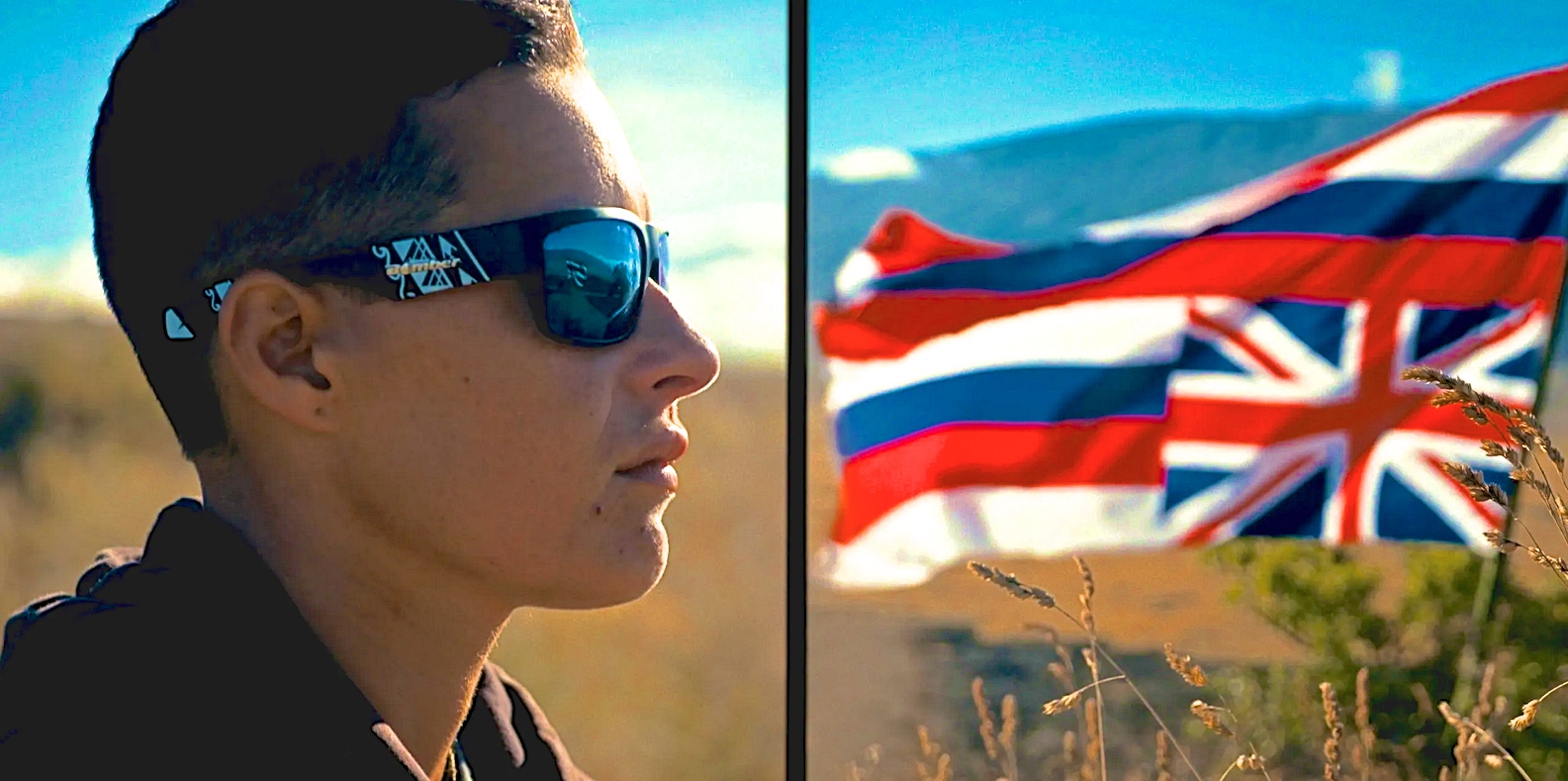
This Is the Way We Rise begins under the cover of darkness with eight Native Hawaiian activists huddled together against the bitter Mauna Kea cold, against the state enforcement agents barreling towards them. The activists were protesting the proposed construction of the Thirty Meter Telescope (TMT) atop Mauna Kea, a dormant volcano on the island of Hawai‘i valued for decades by the astronomical community for its unhampered view of the universe. If built, the TMT would be the largest visible-light telescope on the mountain, dwarfing the 13 other telescopes already occupying Mauna Kea’s slopes.

For Hawaiians, Mauna Kea is more than just a mountain. It is a sacred site, the piko or center of where Wākea (the sky father) and Papa (earth mother) meet, a solemn place not only in Hawaiian cosmology but in the stories of cultures all across Polynesia. The eight activists—or kia‘i (protectors), as they are often called—were there to make a statement. As long as they remained standing, the TMT would not be built.

Among the kia‘i that day was Jamaica Heolimeleikalani Osorio, the poet and activist at the film’s center. A decade earlier, at just 18 years old, Osorio was heralded as a voice for the next generation of Native Hawaiians. Her poems, delivered in her now characteristic cadence of vulnerability and strength, vividly captured the experience of being queer and kanaka maoli, or Native Hawaiian, in a political climate that was often hostile to both parts of her identity.

The veracity of her poetry won her accolades and applause. It captured the attention of prominent audiences, including President Barack Obama and an enraptured first family during the White House’s inaugural Poetry Jam. But by the start of the film, poetry and performing had lost their luster for Osorio, who by then had not written a poem for three years.

“Not only did it feel like a chore and even, like, a pressure to produce for other people,” Osorio recounts in the film, “but I felt like I had run out of things to say.”

In This Is the Way We Rise, which was chosen to be screened at this year’s Sundance Film Festival, Osorio’s internal conflict is set against the backdrop of the fight to protect Mauna Kea, a protest that at its height drew thousands of demonstrators to Hawai‘i’s highest peak. As we watch the growth of this movement, so too do we witness Osorio reclaim her voice.

I speak with Osorio and director Ciara Lacy, who this year became the first female Native Hawaiian to be shown at Sundance, about this cross section of creativity and activism, the longstanding effects of colonization, and how Native peoples can help save us from the current climate catastrophe....


Click HERE To Read The Entire Interview

Tuesday, May 15, 2018

HAS THE ILLEGAL OCCUPATION OF HAWAI`I WORKED?

How Land Schemes Turned Lava Fields Into Subdivisions

Honolulu Civil Beat - May 14, 2018

In 1958, when Hawaii statehood was still a year away, two Colorado businessmen came up with a brilliant money-making scheme: Buy 12,000 acres of undeveloped, dirt-cheap land on the rocky, rainy slopes of the world’s most active volcano, divide it into 4,000 3-acre lots, and sell them for $500 to $1,000 apiece, paid off at $150 down and $8 a month.

Glen Payton and David F. O’Keefe called their subdivision “Hawaiian Acres.” It would forever change the face of the Big Island — not always for the better.

“The lots sold spectacularly well,” wrote George Cooper and Gavan Daws in Land and Power in Hawaii. “The effect of this success was electrifying.”

A Big Island land boom was on.

Only two years after Hawaiian Acres lots went on sale, a Honolulu Star-Bulletin article could report that at least 11 major subdivisions were underway — including a cluster of 2,231 one-acre lots titled “Leilani Estates,” sited directly on top of Kilauea’s East Rift Zone. The article was headlined, “Here’s Up-to-Date Report on Big Island Subdivisions,” but above the headline were five words in smaller type: “There’s Little Danger from Volcanoes.”

In the article, Leilani developer Kenneth W. Ing claimed that “volcanic risk” to his development was essentially less than one in a thousand.

He based his claim on calculations by a University of Hawaii geology professor, Dr. Gordan MacDonald, who had said that since 1750, lava had covered only 20 square miles out of an east Puna area of 125 square miles: “On this basis, the likelihood of lava covering any given plot of land in any single given year is less than .1 percent.”

Since 1960, lava flows from the flanks of Kilauea have wiped out the town of Kapoho and at least four other communities. But the article also quotes MacDonald as saying, “It is impossible to say how soon volcanic activity might affect any given area, and data are insufficient to assign any significant mathematical probability for such an event.”

What MacDonald, Ing and the article failed to mention was that in January and February of 1960, a lava flow had wiped out the entire town of Kapoho, destroying the village’s businesses, a hot springs resort and nearly 1,000 homes on land adjacent to Ing’s new subdivision—or that in 1955, another eruption had taken out much of nearby Pohoiki.

Since then, lava has obliterated at least four more nearby communities and subdivisions: Royal Gardens, Kapa’ahu, Kaimu and Kalapana.

Now, it’s the turn of Leilani Estates itself, which so far has lost 36 structures, including at least 26 homes, to the latest East Rift lava event.

As of Sunday more than 2,000 people have been evacuated from Leilani Estates, Lanipuna Gardens and other nearby locations. Underground magma is believed to be moving further down the rift, threatening other communities such as Kapoho, parts of which have been redeveloped since the 1960 eruption into three coastal subdivisions, Kapoho Beach Lots, Kapoho Farm Lots and Kapoho Vacationland.

Those who live in the subdivisions aren’t the only ones who’ve had to leave. County officials have directed the closure of the Lower Puna’s numerous vacation rentals, in order to save water and “reduce the area population so emergency operations can focus on residents.”

Affordable Homes — At A Price

Cooper and Daws note that by the time the Big Island land boom wound down in the 1970s, 80,000 new lots had been created on an island that, at that time, held only 80,000 people.

Then-Gov. John Burns spearheaded the drive to transform North Kona and North and South Kohala into what Burns called a “gold coast.” It remains a region of rich resorts and upscale homes. Other developers pumped money into resort hotels along Hilo’s Banyan Drive.

But Puna and Kau became a playground for the wannabe-rich. Those three districts, located on the slopes of Mauna Loa and Mauna Kea, lacked the Gold Coast’s white sand beaches and relentlessly sunny weather. And those pesky eruptions kept making new land — but it was lava and volcanic ash, too hard and raw to be paradise.

Mainland investors and mainland buyers didn’t necessarily know that, however. The developments that grew up there are still sometimes known, locally, as “land scam subdivisions.”

Pam Frierson, in The Burning Island, compares those developments to similar ones that were sprouting up elsewhere in America’s sunbelt, from Florida to the Southwest: “Large scale speculative subdivisions were being carved out of marginal lands — desert, tidal flats, lava lands — and sold as cheap ‘retirement’ or ‘investment’ properties.”

Most of these subdivisions were “substandard,” having a  grid of private roads that didn’t meet county building codes — perhaps paved, perhaps not — and lacking basic services such as running water and sewer lines.

Many eventually joined the island’s power grid, but most still rely on rainwater catchment tanks, and on cesspools or septic tanks to dispose of waste. They also lacked visible means of financial support. Most were located far from jobs. Though usually zoned agricultural, they were carved into parcels too small for conventional farms, even if they actually had tillable soil. Some subdivisions had a general store, but there was no traditional town center, no hub of commerce.

County officials had a huge incentive to go along with the land schemers: a windfall in property taxes from those thousands of new lots. In 1987, Frierson asked then-Hawaii County Planning Director Albert Lono Lyman why the county had acquiesced to all those substandard subdivisions.

“Greed and short-sightedness,” he summarized, noting that “the majority of those lots were sold, sight unseen, to mainland buyers.”

Some subdivisions were the work of mainland investors. California oil company magnate Jack Crawford, for instance, built Ocean View Estates on old lava flows in Kau.

But there were plenty of local players, including state officials. Hawaii County police inspector William Kamau headed the hui that tried to build a failed subdivision called Crescent Acres. State Sen. Kazahisu Abe headed the Hilo Development Inc., which developed Orchid Isle Estates in Puna. U. S. Sen. Hiram Fong was president of the company responsible for a development called Fern Estates.

Nor was the greed limited to local bigwigs. Cooper and Daws estimated that one in four Big Island families invested in lots. Big Island money in the lots was dwarfed, though, by outside investments: 12 percent of the lots bought by 1975 were by Big Islanders, 35 percent by Oahu residents, and most of the rest by mainlanders.

With almost no provisions for basic infrastructure, the original investors didn’t appear to actually believe people would live on those lots. But thousands of people proved them wrong.

By the time the subdivision boom finally petered out in the 1970s — partly as a result of stronger zoning and planning ordinances, but also, perhaps, because of the sheer glut of undeveloped lots — East Hawaii held at least 15 major substandard subdivisions and several smaller ones — all of them located in Lava Risk Zones 1, 2 or 3, the three highest-risk categories given by the U.S. Geological Survey.

One cluster of subdivisions, including Hawaiian Ocean View Estates and Hawaiian Ranchos, clung to the lava field on the steep southern end of Mauna Loa.

But most were in Puna, forming an almost continuous line from Volcano down Highway 11 to Keaau, then from Keaau down Highway 130 to the sea at the eastern end of the island.

Some built in the subdivisions because they’d been suckered in and had to roll with the punches. Frierson interviewed Jack and Patty Thompson, who were among the last holdouts in volcano-ravaged Royal Gardens. They’d invested their life savings in their home, after seeing a promotional movie about a “fertile area directly adjacent to Hawaii Volcanoes National Park.”

“They didn’t tell you the place sat right below an active rift zone,” Jack Thompson told Frierson.

With the possible exception of Royal Gardens, which was wiped out by a series of lava flows between 1983 and 2012, every one of those subdivisions is inhabited — and many, especially those in lower Puna, are burgeoning, despite the lava risk and the lack of amenities.

They’re the main reason why Puna is the fastest-growing district on the island. According to the Hawaii County General Plan, the district held about 31,300 people in the year 2000.

By 2015, its population had soared to nearly 50,000. By 2020, it’s expected to reach 58,000, surpassing Hilo to become the island’s most populous district. It’s achieved that remarkable growth despite the loss of four communities to molten rock.

Many more came because land speculation had driven prices sky-high in more desirable locations, and companies building those Kona mega-resorts hadn’t made provisions for housing their workers.

The island ended up with much of its jobs on one side of the island and its affordable housing on the other side, generating another local term: the “5 o’clock derby,” for the early morning commute between Puna or Kau and the North Kona/Kohala resorts.

“Poor people have to live somewhere,” noted one Puna Facebook user.

Many of these later buyers know about the lava, but they have to live with the risk, gambling that Madame Pele won’t come to their homes during their particular lifetimes.

But the odds may be considerably worse than Dr. MacDonald predicted back in 1960. According to the USGS, in the 20 years between 1983 and 2003 alone, another 40 square miles were buried in fresh layers of lava.

Sunday, May 13, 2018

IS HAWAI`I READY TO BECOME INDEPENDENT AGAIN? 
FIND OUT ON “VOICES OF TRUTH - ONE-ON-ONE WITH HAWAI`IʻS FUTURE"


"Hawai`i National Transitional Authority - A Visit With Poka Laenui"

Is Hawai`i ready to become an independent country again? What kind of government will it have? Who will be in charge? Which constitution will be used? Those are just some of the questions needing to be asked, according to Hawaiian Sovereignty advocate Poka Laenui and thatʻs why the Hawai`i National Transitional Authority was created. Join us in our fascinating visit with Poka as he shows why these conversations are ones that everyone must come together and discuss on the path to a Free Hawai`i - Watch It Here

MONDAY, May 14th At 6:30 PM – Maui – Akaku, Channel 54

MONDAY, May 14th At 5:30 PM & FRIDAY, May 18th At 3:30 PM – Hawai`i Island – Na Leo, Channel 53  

NEW! - Now More Na Leo O Hawai`i Air Dates -
TUESDAY, May 15th At 11:00 AM & SATURDAY, May 19th At 8:30 AM – Hawai`i Island – Na Leo, Channel 54

TUESDAY, May 15th At 7:30 PM, THURSDAY, May 17th At 7:30 PM & SATURDAY, May 19th At 5:30 PM – Kaua`i - Ho`ike, Channel 52


Sneak Peek! -


"Saving Hawai`iʻs Environment - A Visit With Marti Townsend" 

With Sierra Club Hawai`i turning fifty years old, we decided to talk with itʻs Director Marti Townsend. She told us Sierra Club Hawai`i has been busy inspiring people of all ages to get outdoors, experience Hawai`iʻs unique environment and get involved protecting Hawai`iʻs endangered places. She explained everything they do is all about mālama i ka honua, or “cherishing the earth.” Join us in our fascinating visit with Marti filmed at Honoluluʻs beautiful Foster Botanical Garden and you too will see why sheʻs so dedicated to turning people on to the beautiful environment and place we all call home - Watch It Here

FRIDAY, May 18th At 8:00 PM & SATURDAY, May 19th At 5:30 PM – O`ahu - `Olelo, Channel 53

Now you can become a fan of Voices Of Truth on Facebook by clicking Here and see behind the scenes photos of our shows and a whole lot more.  

Voices Of Truth interviews those creating a better future for Hawai`i to discover what made them go from armchair observers to active participants. We hope you'll be inspired to do the same.
 
Voices Of Truth now airs on local access stations in over 90 cities across the US and throughout the world. Check your local listings.
 
For news and issues that affect you, watch Free Hawai`i TV, a part of the Free Hawai`i Broadcasting Network.
 
Please share our Free Hawai`i Broadcasting Network videos with friends and colleagues. That's how we grow. Mahalo.

Saturday, May 12, 2018

THE RUMBLINGS ARE GETTING LOUDER
 

Monday, May 07, 2018

BECOME A FAN OF "VOICES OF TRUTH - ONE-ON-ONE WITH HAWAI`I'S FUTURE" ON FACEBOOK

See Behind The Scenes Shots Of Our Shows


Click HERE To Become A Fan

Sunday, May 06, 2018

WHATʻS THE HAWAI`I NATIONAL TRANSITIONAL AUTHORITY? FIND OUT ON “VOICES OF TRUTH - ONE-ON-ONE WITH HAWAI`IʻS FUTURE"


"Hawai`i National Transitional Authority - A Visit With Pōkā Laenui"

Is Hawai`i ready to become an independent country again? What kind of government will it have? Who will be in charge? Which constitution will be used? Those are just some of the questions needing to be asked, according to Hawaiian Sovereignty advocate Pōkā Laenui and thatʻs why the Hawai`i National Transitional Authority was created. Join us in our fascinating visit with Pōkā as he shows why these conversations are ones that everyone must come together and discuss on the path

to a Free Hawai`i - Watch It Here

MONDAY, May 7th At 6:30 PM – Maui – Akaku, Channel 54

MONDAY, May 7th At 5:30 PM & FRIDAY, May 11th At 4:30 PM – Hawai`i Island – Na Leo, Channel 53  

NEW! - Now More Na Leo O Hawai`i Air Dates -
TUESDAY, May 8th At 7:30 AM & SATURDAY, May 12th At 8:30 AM – Hawai`i Island – Na Leo, Channel 54

TUESDAY, May 8th At 7:30 PM, THURSDAY, May 10th At 7:30 PM & SATURDAY, May 12th At 5:30 PM – Kaua`i - Ho`ike, Channel 52

SATURDAY, May 12th  At 5:30 PM – O`ahu - `Olelo, Channel 53


Now you can become a fan of Voices Of Truth on Facebook by clicking Here and see behind the scenes photos of our shows and a whole lot more.  

Voices Of Truth interviews those creating a better future for Hawai`i to discover what made them go from armchair observers to active participants. We hope you'll be inspired to do the same.
 
Voices Of Truth now airs on local access stations in over 90 cities across the US and throughout the world. Check your local listings.

For news and issues that affect you, watch Free Hawai`i TV, a part of the Free Hawai`i Broadcasting Network.
 
Please share our Free Hawai`i Broadcasting Network videos with friends and colleagues. That's how we grow. Mahalo.

Monday, December 25, 2017

Tuesday, November 28, 2017

WHAT IS LA KU`OKO`A - INDEPENDENCE DAY IN HAWAI`I?


In the Kingdom of Hawai`i, November 28 was an official holiday called Lā Kū`oko`a, or Independence Day. This was the day in 1843 when England and France formally recognized Hawai`i's independence.

Faced with the problem of foreign encroachment of Hawaiian territory, His Majesty King Kamehameha III deemed it prudent and necessary to dispatch a Hawaiian delegation to the United States and then to Europe, with the power to negotiate treaties and to ultimately secure the recognition of Hawaiian Independence by the major powers of the world.

In accordance with this view, Timoteo Ha`alilio, William Richards and Sir George Simpson were commissioned as joint Ministers Plenipotentiary on April 8, 1842.

Sir George Simpson, shortly thereafter, left for England, via Alaska and Siberia, while Mr. Ha`alilio and Mr. Richards departed for the United States, via Mexico and the US on July 8, 1842.


The Hawaiian delegation, while in the United States of America, secured the assurance of US President Tyler on December 19, 1842 of its recognition of Hawaiian independence, and then proceeded to meet Sir George Simpson in Europe and secure formal recognition by Great Britain and France.

On March 17, 1843, King Louis-Phillipe of France recognized Hawaiian independence at the urging of King Leopold of Belgium, and on April 1, 1843, Lord Aberdeen on behalf of Her Britannic Majesty Queen Victoria, assured the Hawaiian delegation that:


"Her Majesty's Government was willing and had determined to recognize the independence of the Sandwich Islands under their present sovereign."

Formal Agreement of Recognition -

 
On November 28, 1843, at the Court of London, the British and French Governments entered into a formal agreement of the recognition of Hawaiian independence, with what is called the Anglo-Franco Proclamation.

To wit-


"Her Majesty the Queen of the United Kingdom of Great Britain and Ireland, and His Majesty the King of the French, taking into consideration the existence in the Sandwich Islands (Hawaiian Islands) of a government capable of providing for the regularity of its relations with foreign nations, have thought it right to engage, reciprocally, to consider the Sandwich Islands as an Independent State, and never to take possession, neither directly or under the title of Protectorate, or under any other form, of any part of the territory of which they are composed.

The undersigned, Her Majesty's Principal Secretary of State of Foreign Affairs, and the Ambassador Extraordinary of His Majesty the King of the French, at the Court of London, being furnished with the necessary powers, hereby declare, in consequence, that their said Majesties take reciprocally that engagement.

In witness whereof the undersigned have signed the present declaration, and have affixed thereto the seal of their arms.

Done in duplicate at London, the 28th day of November, in the year of our Lord, 1843.
[L.S.] Aberdeen [L.S.] St. Aulaire" 


National Holiday -
November 28 was thereafter established as an official national holiday of the Hawaiian Kingdom to celebrate Hawaii's independence.


International Stature -
As a result of this recognition, the Hawaiian Kingdom entered into treaties with the major nations of the world and established over ninety diplomatic legations and consulates in seaports and cities around the world.

The Fake Revolution -
Fifty years later, in 1893, an illegal intervention by the U.S. military resulted in a "fake revolution" against the legitimate Hawaiian government, and a puppet oligarchy set itself up with its main purpose of annexing Hawai`i to the United States.

After a failed armed attempt by Hawaiians to retake their Kingdom in 1895, the usurpers announced that Lā Kū`oko`a would no longer be celebrated, and the American holiday Thanksgiving Day would be the official national holiday instead.

Removing a holiday like Hawai`i Independence Day was a way to cover up and try to destroy the history and identity of the Hawaiian Kingdom and its people. 


At first Hawaiians protested and celebrated Lā Kū`oko`a anyway, telling the story of the national heroes who had traveled to Europe to secure Hawaii's recognition.

But over time, this history — knowledge of the holiday and how it was replaced — faded and was almost lost, until recently, when Hawaiian language scholars started translating Hawaiian language newspapers and rediscovered the story.


Today’s celebration of Lā Kū`oko`a asserts that Hawai`i is still an independent nation, even under prolonged illegal occupation.

Friday, August 21, 2015

HAWAI`I THE FAKE STATE - A CELEBRATION OF THEFT


The history books say Hawaiians and everyone else living in Hawai`i at the time voted overwhelmingly to become the fiftieth US state on August 21, 1959, fifty-six years ago today.

Yet nothing is further from the truth.


Actually only thirty-six percent of all eligible voters voted in the 1959 statehood vote. And yes, ninety-four percent of that thirty-six percent did vote for statehood.

But who were those voters? They were overwhelmingly Americans who had settled in Hawai`i to live, along with the US military and their family members.

The truth is, sixty-four percent of all eligible voters never voted at all.


And the vast majority of Hawaiians boycotted the vote entirely.

So a small minority voted for statehood, and those voters overwhelmingly were foreign settlers and the US military. 


So the anniversary of US Hawai`i Statehood is actually a celebration of theft and stolen property.


Friday, July 31, 2015

BRITISH DID WHAT THE U.S. HASN'T - RETURN HAWAI`I

Today is La Ho`iho`i Ea - Sovereignty Restoration day in Hawai`i.

It was a wrong made right after five months - the restoration of the Hawaiian Kingdom when forced under British rule in 1843.


In the early 1840s, during the reign of King Kamehameha III, English consul Richard Charlton made outrageous land claims against the Hawaiian people to provoke a British takeover.

At his request, a British war cruiser arrived on Feb. 10, 1843, under the command of Lord George Paulet, who demanded special lands and rights from the king for British subjects.

In order to avoid bloodshed, Kamehameha III ceded his kingdom to Paulet under protest and appealed to Queen Victoria for redress.

British fleet commander Adm. Richard Thomas, enforcing his country's policy that the laws and customs of native governments be treated with courtesy and respect, sailed from Mexico to Hawai`i to remedy the trouble.

On July 31, 1843, Thomas ordered the Hawaiian flag raised and the kingdom restored at a ceremony at Kulaokahu`a - which today is known as Thomas Square named after him.

Kamehameha III proclaimed a 10-day holiday, and throughout his reign, July 31 was celebrated as La Ho'iho'i Ea or Sovereignty Restoration Day.

He also proclaimed the now famous motto, "Ua mau ke ea o ka `aina i ka pono," which means, "The sovereignty of the land is maintained by right behavior."

Tuesday, April 07, 2015

HAPPENING NEXT MONDAY


Tuesday, March 31, 2015

WHAT CAN AMERICANS DO TO HELP FREE HAWAI`I?

US Americans should start using critical thinking in resolving the Hawai`i fake state issue.

If in fact the US is unlawfully occupying Hawai`i logically it should deoccupy it.

US Americans should become familiar with the laws of occupation to understand the issues.

They will then also understand the folly of the failed attempt to turn Hawaiians into American indians and tribes through Kana`iolowalu, the Native Hawaiian roll and what it seditiously represented.

Itʻs well past time for US citizens to learn of the outright lies and misrepresentations of facts that have been fostered on US Americans and what has and is being done in their name.

Amid myths and hoax lie documented facts with US admittance of complicity through covert and overt activities to destabilize the Hawaiian Kingdom. 

US actions include outright invasion and takeover through a declaration among those involved, with the covert assistance of the US which was unbeknownst to the citizens of the Kingdom over a century ago.

This all took shape in insurgents staging a fake revolution to validate the villainous actions spurred by US government officials and their American agents and counterparts residing within the Hawaiian Kingdom.


Saturday, March 28, 2015

CURIOUS ABOUT HOW HAWAI`I SUPPOSEDLY BECAME A US STATE ?

The United States acquired Hawai`i through force.

Queen Lili'uokalani, Hawai`i's last Queen, was deposed on Jan. 17, 1893, by a group of American businessmen supported by the United States Navy and Marine Corps and diplomatic representatives.

Sovereignty of Hawai`i was allegedly transferred to the US on Aug. 12, 1898 during ceremonies at `Iolani Palace in Honolulu, on the island of O`ahu.

Hawai`i allegedly became a US territory in 1900.

On Nov. 23, 1993, the United States apologized for illegally overthrowing the Kingdom of Hawai`i, and recognized the inherent sovereignty and right of self-determination of native islanders.

Needless to say, a lot of shady events took place between January 17,1893 and August 21, 1959.

Today, the US and itʻs puppet, the fake state of Hawai`i, is attempting to cover over itʻs illegal and immoral acts by offering to make native Hawaiians American Indians and place them on reservations.

Needless to say Hawaiian sovereignty is a hot issue in the islands to this day and likely will be for as long as the United States illegal occupation of Hawai`i continues.

Hawaiian Kingdom Nationals Were Told They Were Adopted - But Instead Found Out They'd Been Kidnapped.


Saturday, February 14, 2015

IS INDEPENDENCE REALLY AN OPTION THROUGH "NATION-BUILDING" - FEDERAL RECOGNITION ?


U.S. Code 25, Chapter 3, Section 71 -

"No Indian nation or tribe within the territory of the United States shall be acknowledged or recognized as an independent nation, tribe, or power with whom the United States may contract by treaty."


Tuesday, January 20, 2015

CASH THAT MAKES A SPLASH!

Saturday, January 17, 2015


Friday, January 16, 2015

HAPPENING TOMORROW IN HONOLULU
